 Save
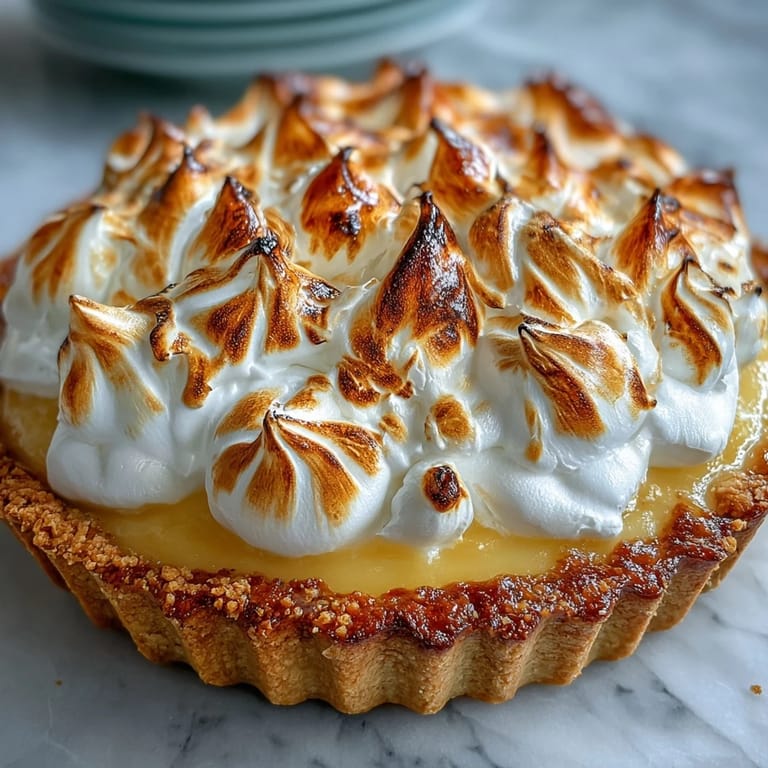
Save My neighbor once brought over a lemon meringue pie so perfect it looked airbrushed. I asked for the recipe, convinced it required professional training or at least a culinary degree. She laughed and said the secret was just patience and room temperature egg whites. That weekend, I tried it myself, and despite a slightly lopsided meringue, the first bite proved her right. The contrast between tart lemon and sweet cloud-like topping was worth every careful step.
I made this pie for a spring potluck, and someone actually asked if I bought it from a bakery. That compliment felt better than any trophy. Watching people go quiet after the first forkful reminded me why some recipes become classics. The filling was bright and bold, the meringue melted on the tongue, and the crust stayed crisp even after hours on the table.
Ingredients
- All-purpose flour: Forms the tender, flaky base that holds everything together without stealing the spotlight from the lemon.
- Cold unsalted butter: Cubed and chilled, it creates those desirable pockets of flakiness when cut into the flour just right.
- Ice water: Brings the dough together gently without overworking it, which keeps the crust from turning tough.
- Granulated sugar (for filling): Balances the sharp lemon juice and gives the filling body when combined with cornstarch.
- Cornstarch: Thickens the filling to a smooth, sliceable consistency that won't weep or run.
- Egg yolks: Add richness and a silky texture to the lemon custard, making it luxurious without being heavy.
- Lemon zest and juice: Freshly grated zest and juice deliver the bright, punchy flavor that defines this pie.
- Egg whites: Whipped at room temperature, they transform into a stable, glossy meringue that crowns the pie beautifully.
- Cream of tartar: Stabilizes the egg whites so the meringue holds its shape and doesn't weep after baking.
- Vanilla extract: A subtle hint that rounds out the sweetness and adds warmth to the meringue.
Tired of Takeout? 🥡
Get 10 meals you can make faster than delivery arrives. Seriously.
One email. No spam. Unsubscribe anytime.
Instructions
- Mix the Crust:
- Whisk the flour, salt, and sugar together, then work the cold butter in with your fingertips or a pastry cutter until it looks like damp sand. Add ice water a tablespoon at a time, just until the dough holds together when pressed.
- Chill and Roll:
- Shape the dough into a flat disk, wrap it tightly, and refrigerate for at least an hour so it relaxes and becomes easier to roll. On a floured surface, roll it out evenly to fit your pie dish, then press it in gently and trim the edges.
- Blind Bake:
- Prick the bottom with a fork, line it with parchment, and fill with pie weights or dried beans to keep it from puffing up. Bake until the edges turn golden, then remove the weights and bake a bit longer until the whole crust is crisp and lightly browned.
- Cook the Filling:
- Whisk sugar, cornstarch, and salt in a saucepan, then slowly add water until smooth and cook over medium heat, stirring constantly until it thickens and bubbles. Temper the egg yolks by whisking in a little hot mixture first, then stir everything back into the pan and cook for two more minutes before mixing in lemon zest, juice, and butter.
- Whip the Meringue:
- Beat room temperature egg whites with cream of tartar until soft peaks form, then gradually add sugar and beat until stiff, glossy peaks hold their shape. Fold in vanilla gently at the end.
- Assemble and Bake:
- Pour the warm lemon filling into the cooled crust, then spread the meringue over the top, making sure it touches the crust edges to seal. Bake until the meringue turns golden brown, then let the pie cool completely before chilling it for clean, beautiful slices.
 Save
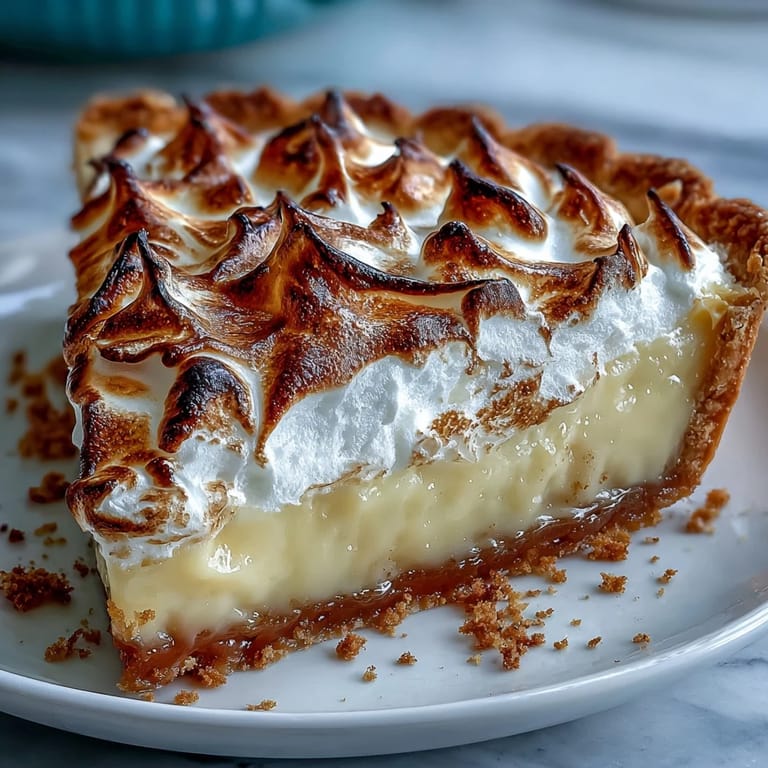
Save The first time I served this pie at a family dinner, my uncle declared it better than the diner version he had been ordering for decades. He even asked if I could make it for his birthday instead of cake. That moment turned this recipe from something I was trying out into something I knew I would make again and again.
Getting the Crust Just Right
A flaky crust starts with cold butter and a light hand. I learned the hard way that overworking the dough turns it tough and chewy instead of tender. Now I stop mixing the second the dough comes together, even if it looks a little shaggy. Chilling the dough before rolling makes it easier to handle and helps it hold its shape in the oven. Blind baking with weights keeps the bottom flat and crisp, which is essential when you are adding a wet filling.
Perfecting the Lemon Filling
The filling should taste bright and bold, not cloying or one-dimensional. I always use fresh lemon juice because bottled juice tastes flat and artificial in comparison. Tempering the egg yolks by adding a little hot liquid first prevents them from scrambling, which I discovered after one unfortunate lumpy batch. Stirring constantly while cooking ensures the cornstarch thickens evenly without clumping. The butter stirred in at the end adds a silky richness that makes each bite feel luxurious.
Mastering the Meringue
Meringue can feel intimidating, but it is mostly about patience and clean equipment. Any trace of grease or yolk will prevent the whites from whipping properly, so I wipe the bowl and beaters with a little lemon juice or vinegar first. Cream of tartar stabilizes the foam and helps it hold up under the heat of the oven. I add the sugar gradually while beating so it dissolves completely, which gives the meringue that glossy, marshmallow-like texture.
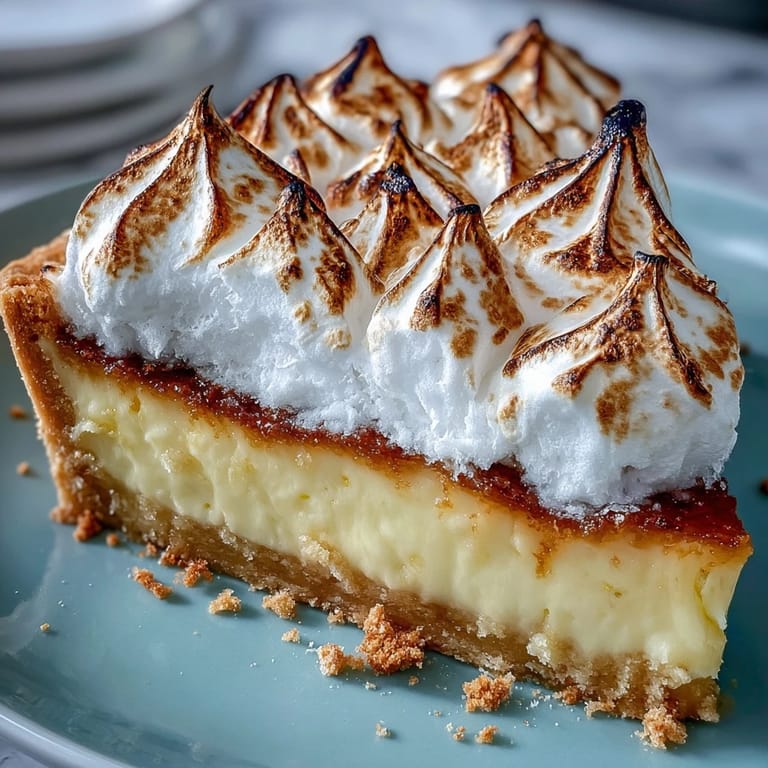
- Use a spatula to create swoops and peaks in the meringue for a dramatic, bakery-style look.
- Watch the oven closely during the final bake so the tips brown without burning.
- Let the pie cool to room temperature before refrigerating to avoid condensation that can make the meringue weep.
 Save
Save This pie has become my go-to when I want to make something that feels special without spending all day in the kitchen. It never fails to turn heads and spark conversation, and honestly, that is half the joy of baking.
Recipe FAQs
- → How do I prevent the meringue from weeping?
Make sure to spread the meringue over warm filling and seal it completely to the crust edges. Baking at the correct temperature and avoiding overbaking also helps prevent moisture from forming between layers.
- → Can I make the crust ahead of time?
Yes, you can prepare and bake the crust up to 2 days in advance. Store it covered at room temperature until ready to fill. This actually helps ensure a crispier texture.
- → Why is my lemon filling runny?
The filling needs to cook long enough for the cornstarch to fully activate and thicken. Make sure to bring it to a full bubble while stirring constantly, then cook for the additional 2 minutes after adding the egg yolks.
- → How long does this dessert keep?
Store covered in the refrigerator for up to 3 days. The meringue is best within the first 24 hours, as it can begin to soften over time due to moisture.
- → Can I use bottled lemon juice instead of fresh?
Fresh lemon juice is strongly recommended for the best flavor and brightness. Bottled juice often lacks the vibrant, tangy taste that makes this dessert exceptional.
- → What's the secret to stiff meringue peaks?
Use room temperature egg whites in a completely clean, grease-free bowl. Add cream of tartar for stability and gradually incorporate sugar while beating on high speed until glossy, stiff peaks form.