 Save
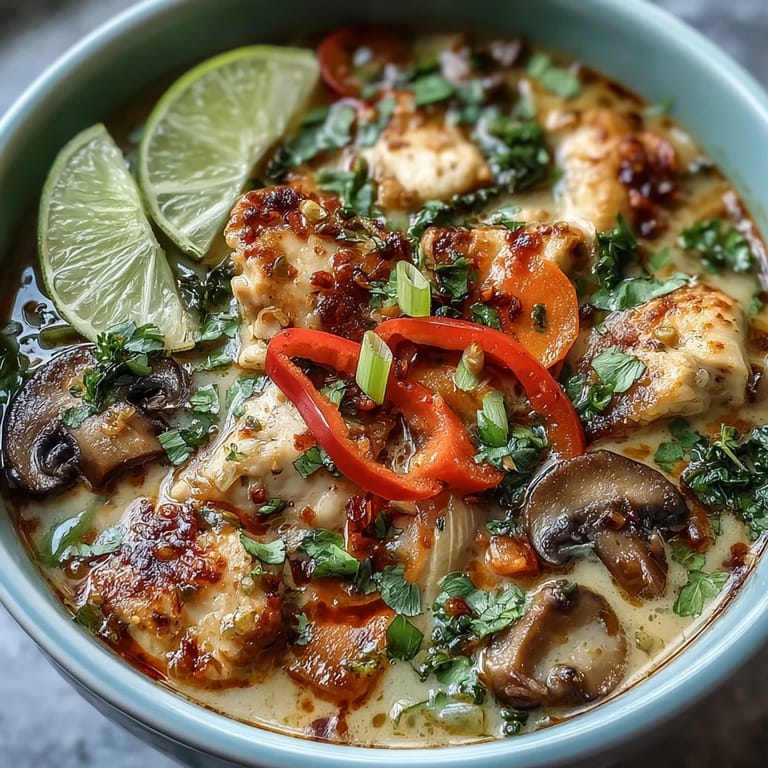
Save One rainy afternoon, my neighbor stopped by with a jar of red curry paste she'd brought back from Bangkok, and I suddenly understood why people lose their minds over Thai food. She watched me make this soup for the first time, correcting my technique with the kind of gentle authority that comes from actually knowing what she's talking about. The kitchen filled with this impossibly fragrant cloud of ginger, garlic, and coconut, and by the time we sat down with our bowls, I realized I'd been making soup all wrong my entire life. It's the kind of dish that tastes like it took hours but comes together in less time than it takes to watch a movie. Now it's my go-to when I need something that feels fancy but doesn't demand much from me.
I made this for my sister during one of those winters where she couldn't quite shake feeling under the weather, and she asked for it three times that week. There's something about the steam rising off a bowl of Thai curry soup that feels inherently healing, even if it's just the power of suggestion. She'd sit at the kitchen counter with her hands wrapped around the bowl, and the color would come back into her face with each spoonful. That's when I stopped thinking of it as just another recipe and started seeing it as something that actually matters.
Ingredients
- Boneless, skinless chicken breast or thighs (400 g): Thighs hold up better to cooking and stay juicier, but breasts work if you slice them thin and don't overcook them past that 2-3 minute mark in the paste.
- Mushrooms (200 g), sliced: Shiitake brings an earthy depth that regular button mushrooms can't quite match, but honestly, use whatever doesn't cost a fortune at your market.
- Carrots (2 medium), julienned: The thin slicing matters here because they soften quickly and release sweetness into the broth without turning mushy.
- Red bell pepper (1 small), thinly sliced: This adds a gentle sweetness and color without overpowering the coconut and curry flavors.
- Baby spinach or bok choy (100 g, optional): If you use this, add it at the very end so it stays bright and tender instead of turning into seaweed.
- Spring onions (2), thinly sliced: Save these for the garnish because they lose their crispness and fresh bite if they cook in the broth.
- Fresh ginger (1 tablespoon), grated: Don't use the jarred stuff if you can help it; fresh ginger brings a livelier heat and complexity that the bottled version can't replicate.
- Garlic (3 cloves), minced: Mince it small and add it to the oil early so it softens and perfumes everything without turning bitter.
- Lemongrass (2 stalks, bruised and cut into 2-inch pieces, optional): Bruising releases the oils, and cutting it into pieces makes it easier to fish out later without leaving fibrous bits in your teeth.
- Kaffir lime leaves (4, optional): These are worth seeking out in an Asian market because they add an aroma that regular lime juice simply doesn't capture.
- Red curry paste (2 tablespoons): This is where your spice level gets decided, so taste as you go and adjust if you like it milder or fiercer than intended.
- Coconut milk (800 ml): Full fat makes it richer and more luxurious, but light coconut milk works if that's what you've got on hand.
- Chicken broth (500 ml): Using homemade broth instead of store-bought changes the whole depth of the soup, but I won't judge you for taking the shortcut.
- Fish sauce (1 tablespoon): I know it smells like low tide, but trust me; it's the secret ingredient that makes this taste authentically Thai instead of like a coconut soup that got confused.
- Brown sugar (1 tablespoon): This balances the heat and acidity, creating that subtle sweetness that makes people ask what that mysterious flavor is.
- Lime juice (1 lime): Fresh lime is non-negotiable here; bottled lime juice will make you sad, and you deserve better.
- Fresh cilantro, chopped: This is your finale, so use it generously and don't let it get buried in the broth.
- Fresh red chili, sliced (optional): For people who think the curry paste alone isn't doing the job, this adds visual heat and a fresh spicy note.
- Lime wedges: Serve these on the side so people can squeeze more brightness into their soup if they want it.
Tired of Takeout? 🥡
Get 10 meals you can make faster than delivery arrives. Seriously.
One email. No spam. Unsubscribe anytime.
Instructions
- Wake up your pot with aromatics:
- Heat your large pot over medium heat and add a splash of oil, then get your ginger, garlic, and lemongrass in there immediately. You're looking for that moment when the kitchen starts smelling incredible, which should happen around the 1-minute mark.
- Bloom the curry paste:
- Stir the curry paste into the oil and let it cook for another minute, which breaks down the spices and releases their flavors instead of just dissolving them into the broth. This is a small step that makes a real difference.
- Introduce the chicken:
- Add your sliced chicken and stir it around in the curry paste for 2-3 minutes, coating every piece so it starts building flavor from the moment it hits the heat. You don't need to cook it all the way through yet.
- Build your broth:
- Pour in the coconut milk and chicken broth, then add your kaffir lime leaves, carrots, mushrooms, and red bell pepper all at once. The vegetables will stay distinct and fresh this way instead of turning into mush.
- Let it simmer gently:
- Bring everything to a gentle simmer and cook for 10-12 minutes until the chicken is cooked through and the vegetables are tender but still have some character. Don't let it boil aggressively or the coconut milk might separate.
- Season with intention:
- Stir in the fish sauce, brown sugar, and lime juice, then taste and adjust because every curry paste brand is different and has its own spice level. This is where you make it yours.
- Add greens if using:
- If you're adding spinach or bok choy, now's the time, and let it simmer for just 1-2 minutes until it wilts down but stays bright. Overcooked greens turn this into a sad situation.
- Remove the aromatics:
- Fish out the lemongrass stalks and kaffir lime leaves because nobody wants to bite into those, then ladle everything into bowls. This is the final moment before people taste what you've made.
- Garnish with generosity:
- Top each bowl with spring onions, cilantro, fresh chili if you're using it, and serve lime wedges on the side so people can adjust the brightness. This is where the soup goes from good to memorable.
 Save
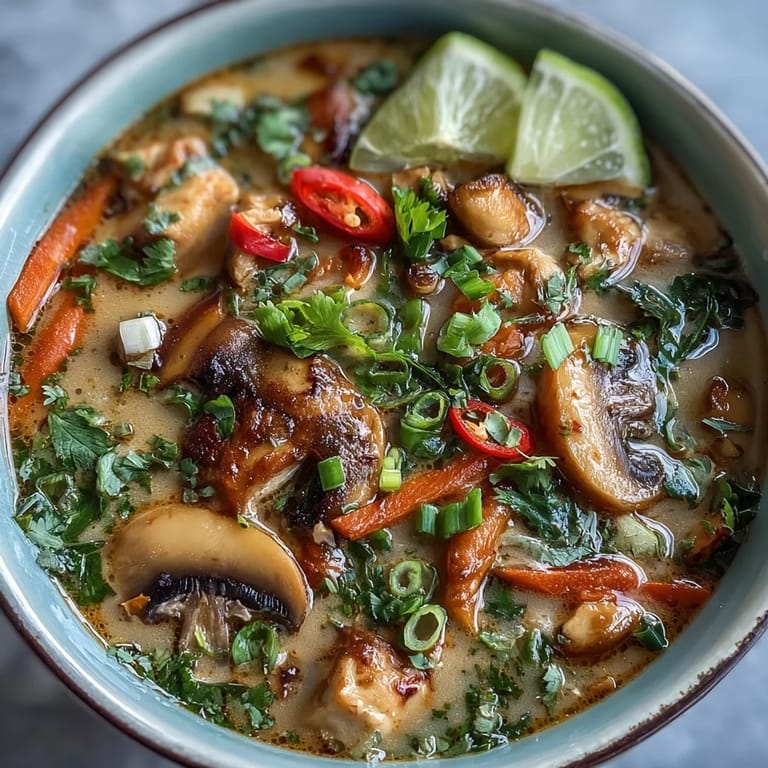
Save My friend who's normally skeptical about anything that isn't Italian food came back for seconds and asked if I could teach her how to make it, which felt like the highest compliment I've ever received in my kitchen. There's something about this soup that converts people and makes them want to learn, maybe because it tastes like you've been simmering it for hours when you've actually only been standing there for 40 minutes.
Why Temperature and Timing Matter
The first time I made this soup, I got impatient and cranked the heat to high, and the coconut milk broke into a greasy, separated mess that looked like a science experiment gone wrong. Medium heat is your friend here because it gives everything time to meld and the chicken time to stay tender instead of turning into little rubber bands. Now I use the timer method: once it starts simmering, I set 12 minutes and don't touch it except to stir, which somehow makes me a better cook.
The Power of Fresh vs. Prepared Ingredients
I used to grab pre-minced garlic from a jar because it seemed efficient, but the difference between that and fresh garlic is the difference between cooking and just heating things up. Fresh ginger, fresh cilantro, fresh lime juice—these aren't fancy additions, they're the actual foundation of why this soup tastes like it came from a restaurant instead of a can. Once I made this switch, I stopped wondering why my homemade food never tasted as good as the Thai place down the street.
Customization Without Losing the Soul
The beauty of this soup is that it's flexible enough to handle your preferences without turning into a completely different dish. You can swap chicken for shrimp, tofu, or mushrooms if you're feeding vegetarians, and the broth will taste just as good if you use vegetable broth and soy sauce instead of fish sauce. If your family thinks four cloves of garlic is two too many, use what makes your kitchen feel like home instead of following orders from someone who wrote the recipe on a good day.
- Shrimp needs only 3-4 minutes to cook, so add it near the end or it'll turn into little rubber bands.
- Tofu should go in at the beginning so it absorbs all the flavors, and silken tofu works better than extra-firm if you want something delicate.
- If you're serving over rice or noodles, account for that when deciding on broth thickness, because you might want it soupier than you think.
 Save
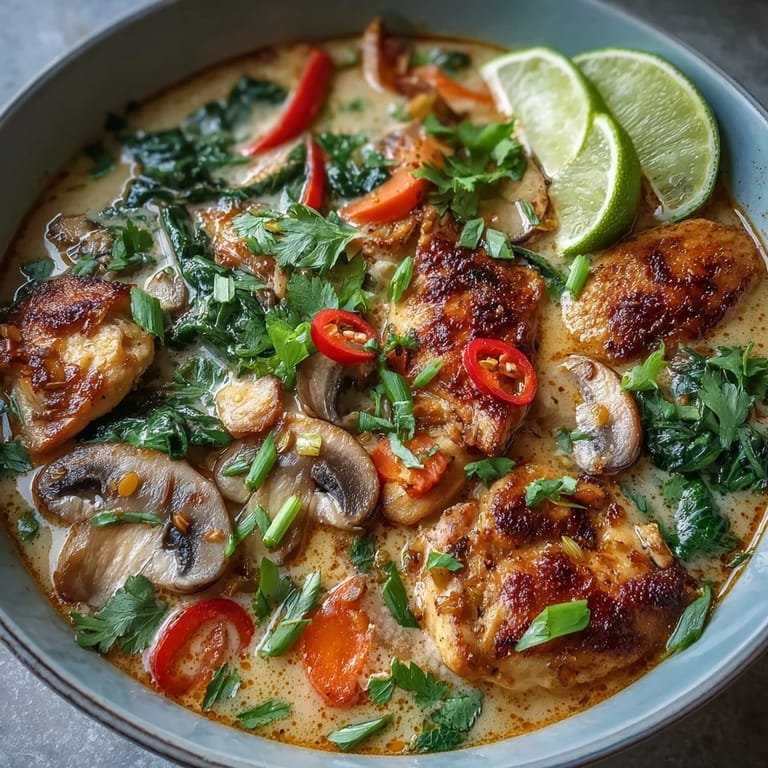
Save This soup has become my answer to almost every question: feeling under the weather, need to impress someone, want comfort food that doesn't feel boring, or just need the house to smell incredible for 40 minutes. It's the kind of recipe that reminds you why you started cooking in the first place.
Recipe FAQs
- → Can I make this soup vegetarian?
Absolutely. Swap chicken for firm tofu and use vegetable broth instead of chicken broth. Replace fish sauce with soy sauce or tamari to maintain the savory depth.
- → How spicy is this soup?
The heat level depends on your red curry paste. Start with 2 tablespoons for mild-medium spice, or increase to 3 tablespoons for a bolder kick. You can always add more paste gradually while tasting.
- → Can I freeze this soup?
Yes, it freezes well for up to 3 months. Cool completely before transferring to airtight containers. The coconut milk may separate slightly when reheated—simply whisk to restore creaminess.
- → What can I serve with this soup?
Jasmine rice or rice noodles make excellent additions for a heartier meal. For wine pairing, try aromatic whites like Riesling or Gewürztraminer to complement the spicy notes.
- → Can I use light coconut milk?
Yes, light coconut milk works well if you prefer a lighter version. The soup will be slightly less creamy but still delicious. Full-fat coconut milk yields a richer, more luxurious texture.
- → Are kaffir lime leaves essential?
They're optional but add authentic citrusy aroma. If unavailable, increase the lime juice slightly or add lime zest. The soup remains delicious without them.