 Save
Save My aunt used to make English toffee every Christmas, and I'd watch her from the kitchen doorway as the butter and sugar transformed into liquid gold. The smell was intoxicating—buttery and caramelized—and she'd test the temperature with such confidence, her eyes trained to spot that exact moment when it turned from amber to deep mahogany. Years later, when I finally made it myself, I understood why she guarded that candy thermometer like it was precious. Once you've seen toffee hit that hard crack stage, you realize why this British classic has stayed beloved for generations.
I brought a batch to my friend's dinner party last fall, wrapped in parchment and tucked into a tin, and watched it disappear before dessert was even officially served. Someone asked for the recipe right there at the table, and I remember thinking how funny it was that something requiring just a candy thermometer and patience felt like magic to everyone else. That night crystallized it for me—this toffee isn't just candy, it's a conversation starter.
Ingredients
- Unsalted butter, 1 cup (225 g): Use real butter here; it's the backbone of your toffee and its natural sweetness will shine through.
- Granulated sugar, 1 cup (200 g): This creates the hard crack structure that makes toffee snap between your teeth.
- Fine sea salt, 1/4 tsp: A pinch of salt against the sweetness is what makes people ask if you added something special.
- Water, 2 tbsp: This helps the butter and sugar dissolve evenly without crystallizing.
- Pure vanilla extract, 1 tsp: Added off heat to preserve its flavor and add a subtle warmth.
- Milk chocolate, 200 g (7 oz): Good quality chocolate matters here because there's nowhere to hide; chopped or chips both work perfectly.
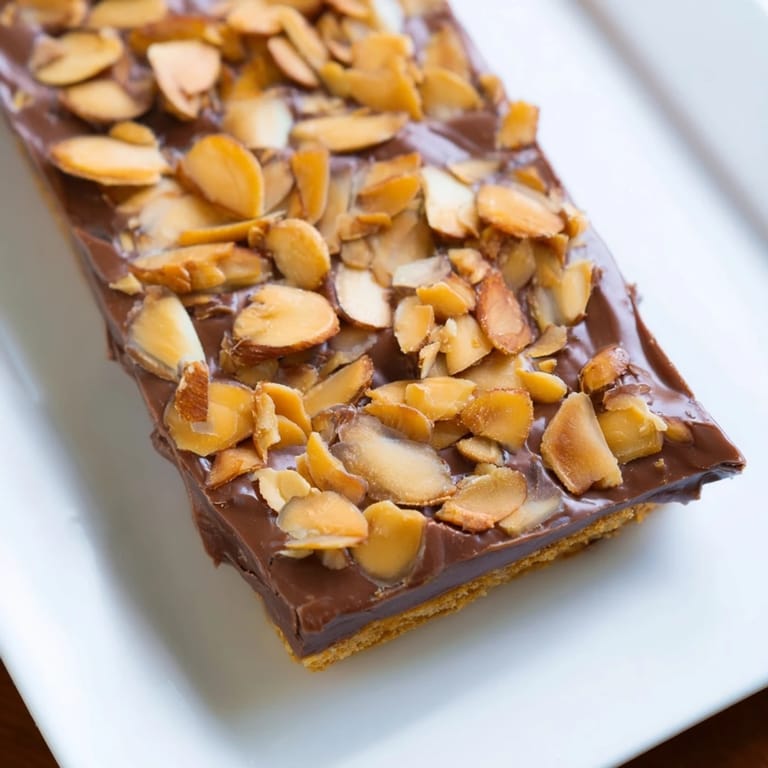
- Toasted sliced almonds, 3/4 cup (90 g): Toasting them yourself brings out an earthy richness that makes all the difference.
Tired of Takeout? 🥡
Get 10 meals you can make faster than delivery arrives. Seriously.
One email. No spam. Unsubscribe anytime.
Instructions
- Prep your stage:
- Line your 9x13-inch pan with parchment paper, leaving a slight overhang so you can lift the finished toffee out easily. Have your candy thermometer within arm's reach and your vanilla measured and ready—once you're cooking, there's no time to hunt for anything.
- Melt and combine:
- In a heavy-bottomed saucepan, add butter, sugar, salt, and water over medium heat. Stir constantly with a wooden spoon until everything is melted and smooth, watching the butter dissolve into the sugar like they were always meant to be together.
- Cook to the hard crack stage:
- Keep stirring as the mixture cooks, and you'll watch it transform from pale to golden to that deep mahogany color that signals it's ready. At around 300°F (150°C) on your thermometer, the bubbles will look slightly different—smaller, more urgent—and that's your sign it's done, about 10–15 minutes total.
- Add vanilla and pour:
- Remove from heat immediately, stir in vanilla quickly, then pour the hot toffee into your prepared pan in one confident motion. Spread it with a spatula to the edges while it's still workable, knowing it'll set firm once it cools.
- Layer the chocolate:
- Let the toffee sit for 2 minutes, then scatter your chopped chocolate over the surface. Wait another 2 minutes for it to soften from the residual heat, then spread it smooth with a spatula—it should cover like butter.
- Crown with almonds:
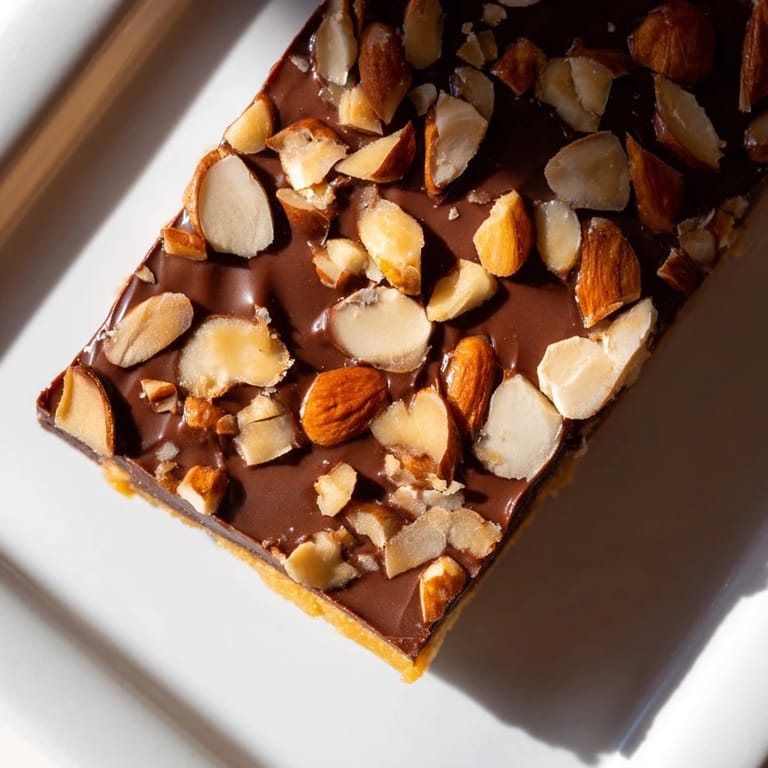
- Sprinkle the toasted almonds over the melted chocolate while it's still tacky, pressing them in gently so they stay put. The warmth will help them set into the chocolate layer.
- Cool and break:
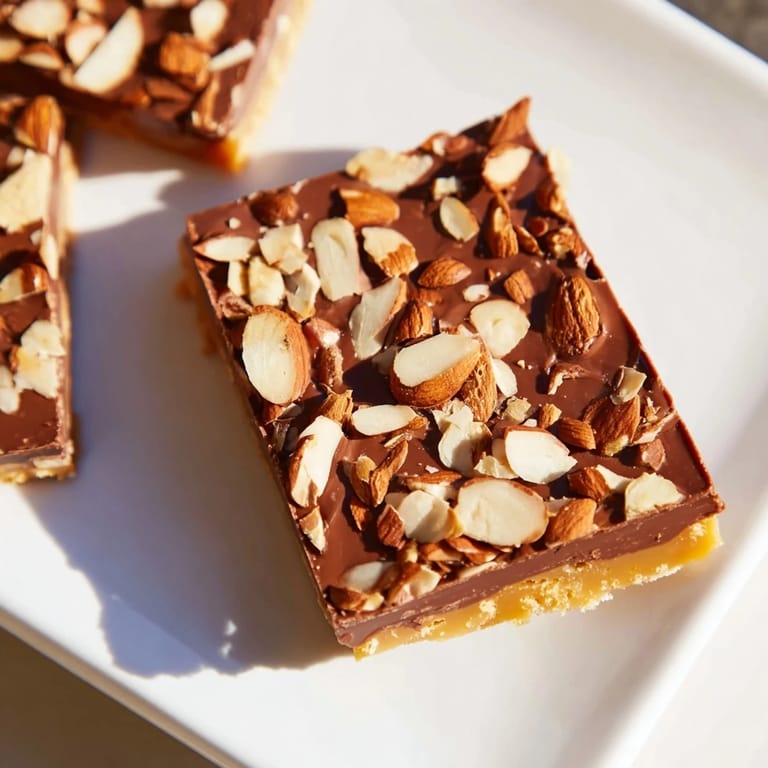
- Let everything cool completely at room temperature for about 2 hours, or speed it up in the refrigerator. Once set, break it into irregular pieces—they taste better that way.
 Save
Save There's a moment when you spread that chocolate and see the almonds press into place that feels almost ceremonial. You know you've made something that looks like it came from a fancy confectionery, something worth keeping, something to be proud of.
Choosing Your Chocolate
The chocolate you choose shapes the entire personality of this toffee. Milk chocolate gives you sweetness and smoothness, while dark chocolate (70% or higher) brings a sophisticated edge that makes the butter and salt shine through. I've made it both ways, and I find myself reaching for milk chocolate when I want pure comfort, but dark when I want people to pause and savor. Either way, quality matters—cheap chocolate has a waxy feel that lingers, while good chocolate melts clean on your tongue.
Beyond Almonds
While toasted almonds are traditional, this toffee becomes a completely different treat with variations. I've used crushed pistachios for a subtle green hue and a slightly bitter flavor, made a nut-free version with toasted sesame seeds that adds an unexpected nuttiness, and even topped it with fleur de sel for a salty-sweet moment. The beauty of toffee is that once you master the base, you're free to make it yours based on what you have and what you love.
Storage and Gifting
Toffee is remarkably stable—it will keep for up to two weeks in an airtight container at room temperature, though humidity is its one real enemy. I've wrapped pieces in parchment, nested them in boxes, and given them as gifts, and they always arrive perfect. The best part about this candy is that it looks intentional and impressive, which means it's the ideal thing to make when you want to give someone something homemade without spending hours in the kitchen.
- Store in layers separated by parchment to prevent sticking and crushing.
- Keep the airtight container in a cool, dry place away from direct sunlight.
- If humidity gets to your toffee and it softens, pop it in the fridge for 30 minutes and it'll firm back up.
 Save
Save Making toffee is one of those small kitchen triumphs that transforms you in the eyes of anyone who tastes it. Once you understand the simple mechanics of butter, sugar, and temperature, you've unlocked a candy that feels fancy but asks very little of you.
Recipe FAQs
- → How do I achieve the perfect toffee texture?
Cook the butter and sugar mixture to 300°F (hard crack stage) using a candy thermometer for a crisp, brittle texture.
- → Can I substitute dark chocolate for milk chocolate?
Yes, dark chocolate can replace milk chocolate to add a richer, slightly bitter contrast to the sweet toffee.
- → What are alternatives to almonds for topping?
Toasted seeds or other nuts can be used as a substitute, or simply omit them for a nut-free version.
- → How should I store the finished toffee?
Keep in an airtight container in a cool, dry place for up to two weeks to maintain freshness and crunch.
- → Why is it important to spread the chocolate while warm?
Spreading chocolate over hot toffee allows it to melt slightly and create a smooth, even layer once set.