 Save
Save The first time I bit into a proper beignet, I wasn't in New Orleans—I was in my friend's cramped apartment kitchen at midnight, and she'd just pulled a batch from the oil. Powdered sugar dusted everywhere: my hands, her apron, the countertop. There's something magical about fried dough that transforms the simplest ingredients into pillowy clouds, and from that night on, I became obsessed with mastering them. These beignets are nothing like the heavy, dense fried pastries I'd imagined; they're actually delicate and ethereal, held together by patience and a little yeast magic.
I remember testing this recipe on a lazy Sunday morning, timing everything so the beignets would be ready right when my parents arrived for breakfast. My mom walked in, caught the smell of hot oil and sugar, and actually gasped. We sat at the kitchen table in our pajamas, passing napkins back and forth, laughing as we became progressively covered in powdered sugar. That's when I realized beignets aren't really about precision or perfection—they're about that moment when something warm and indulgent brings people together.
Ingredients
- All-purpose flour (3 1/2 cups): This is your structure; it gives the beignets their distinctive pillowy shape and tender crumb when combined with the yeast.
- Warm water (1 cup): The temperature matters here—too hot and you'll kill the yeast, too cool and nothing rises; aim for that sweet spot around 110°F where everything activates perfectly.
- Whole milk (1/4 cup): This adds richness and a subtle tenderness to the dough that you can taste in every bite.
- Granulated sugar (1/4 cup): It feeds the yeast and sweetens the dough itself, giving it a gentle flavor foundation.
- Active dry yeast (2 1/4 tsp): This is the soul of the recipe; it creates all those air pockets that make beignets puff up and become ethereal.
- Large egg (1): It enriches the dough and helps bind everything together for a tender texture.
- Unsalted butter (2 tbsp, melted): Adds flavor and a silky texture to the dough without overwhelming it.
- Salt (1 tsp): Balances the sweetness and actually strengthens the gluten network, making the dough more elastic.
- Vegetable oil for frying: Use something neutral and with a high smoke point; you need it to stay stable at 350°F.
- Powdered sugar (1 1/2 cups): The iconic finish that transforms warm dough into a nostalgic New Orleans memory.
Tired of Takeout? 🥡
Get 10 meals you can make faster than delivery arrives. Seriously.
One email. No spam. Unsubscribe anytime.
Instructions
- Wake up the yeast:
- Combine your warm water with a pinch of sugar and sprinkle the yeast over top. Watch as it blooms into a foamy, alive mixture within five minutes—this tells you your yeast is happy and ready to work. If it doesn't foam, your yeast is dead and you'll need to start over.
- Build your base:
- Mix the flour, sugar, and salt in a large bowl, creating a dry foundation that's waiting for the yeast mixture. Adding these separately gives you better control and ensures even distribution.
- Bring it together:
- Pour the foamy yeast, milk, egg, and melted butter into the dry ingredients and stir until a shaggy, rough dough forms. Don't worry if it looks messy; you're about to knead it into submission.
- Knead until smooth:
- Work the dough by hand or with a stand mixer for 5-7 minutes until it becomes smooth, elastic, and slightly tacky. You'll feel it transform under your hands—it goes from rough to satiny, and that's your signal that gluten has developed properly.
- Let it rise:
- Place the dough in an oiled bowl, cover it loosely with plastic wrap or a clean towel, and set it somewhere warm for 1-1.5 hours until it's doubled in size. A warm spot like above your stove, inside your oven with the light on, or on a sunny windowsill works perfectly.
- Roll and cut:
- Punch down the risen dough, transfer it to a floured surface, and roll it out to about 1/4 inch thick—think of a thick sheet of paper. Using a sharp knife or pizza cutter, cut it into 2-inch squares, working quickly so the dough stays workable.
- Heat your oil:
- Use a deep fryer or heavy-bottomed pot and bring the oil to exactly 350°F, checking with a thermometer. Getting the temperature right is crucial—too cold and they absorb oil and become greasy; too hot and they brown before they puff.
- Fry until golden:
- Working in batches so you don't crowd the pan, carefully place the dough squares into the hot oil and let them fry for about 1-2 minutes per side, turning once with a slotted spoon. They should puff dramatically and turn a gorgeous golden brown, like little clouds kissed by the sun.
- Drain and dust:
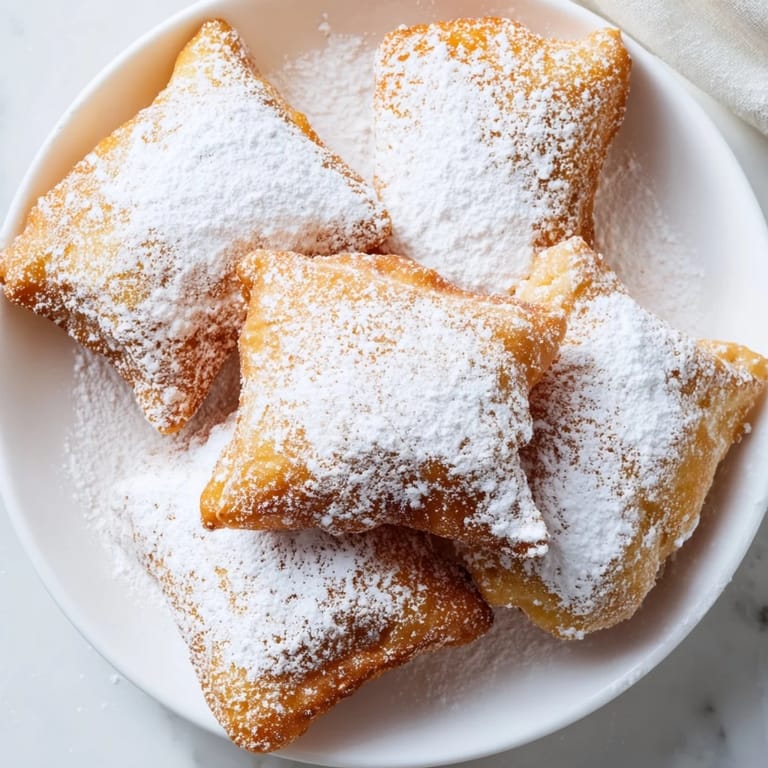
- Remove each beignet with a slotted spoon and lay them on paper towels to drain off the excess oil. While they're still warm, dust them generously—and I mean generously—with powdered sugar until they're almost unrecognizable under a white cloud.
 Save
Save There's a scene from my life that I keep coming back to: my grandmother tasting one of these beignets and getting that faraway look in her eyes, like she was somewhere else entirely. She told me that in her childhood, beignets meant celebration, meant that something special was happening. When you make these from scratch, you're not just frying dough—you're creating that same magic for someone else.
Why Temperature Matters
I learned the hard way that beignet success lives and dies by temperature. The yeast needs warmth to rise properly, the water needs to be just right to activate it, and the oil needs to be steady at 350°F to create that perfect puff. I once tried to eyeball the oil temperature and ended up with heavy, greasy beignets that nobody wanted. Now I use a thermometer religiously, and the difference is night and day. Your kitchen might be cooler or warmer depending on the season, so adjust your rising time accordingly—they'll let you know when they're ready by doubling in volume.
The Art of the Dust
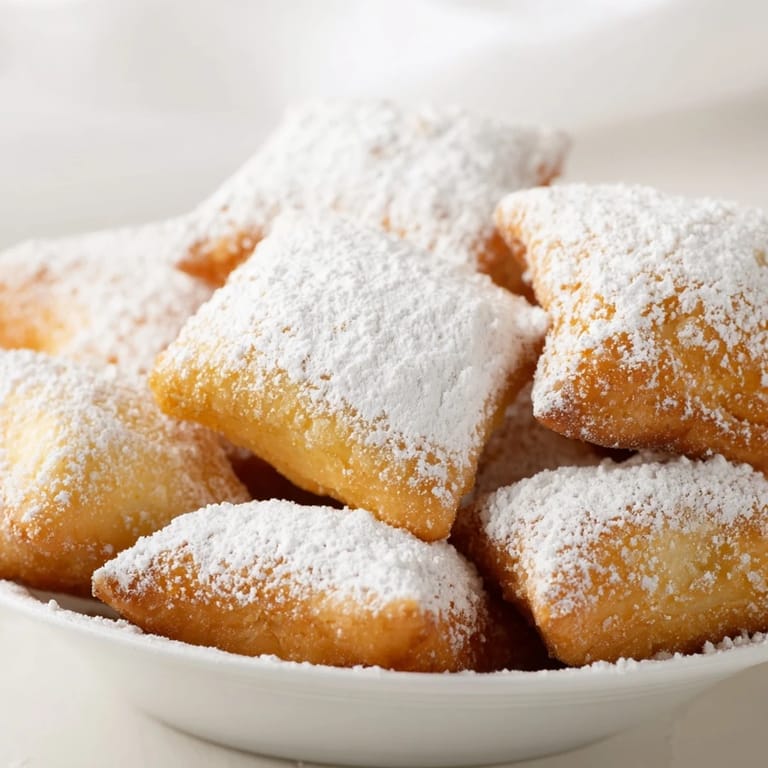
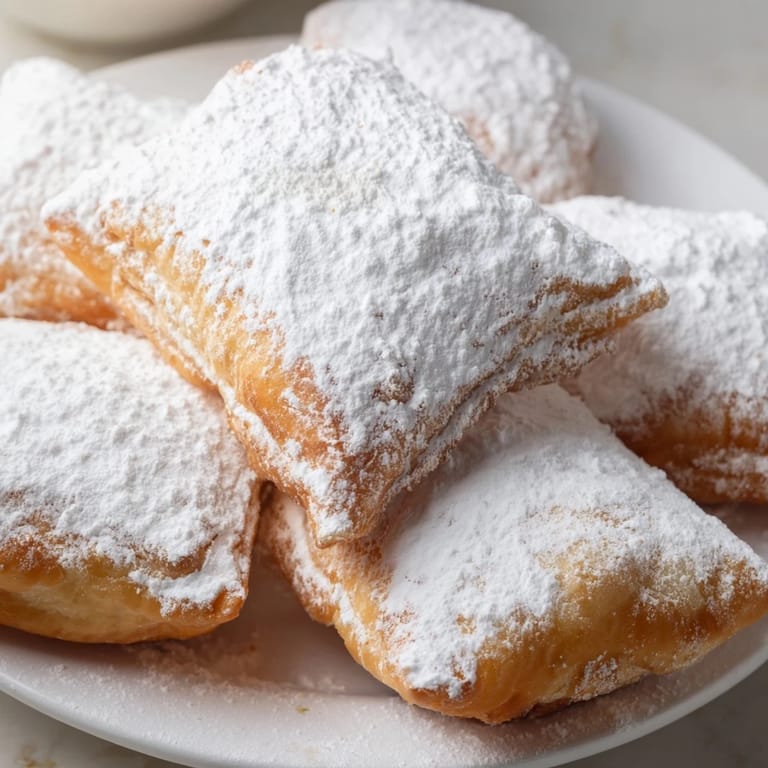
The powdered sugar isn't just a topping; it's the signature that makes a beignet feel authentic and celebratory. I watched someone at a café in the French Quarter dust their beignet with this casual, generous confidence, and I realized you're supposed to go overboard. The sugar gets into every crack and crevice, and when you bite into a warm beignet, it melts slightly and creates this moment of pure indulgence. Don't be shy—coat them while they're still warm so the sugar adheres properly and creates that beautiful cloud.
Serving and Storage Wisdom
These are best served immediately with strong coffee or café au lait, which is really just hot milk poured into your coffee. The warm, sweet beignet against the bitter, creamy coffee is a pairing that makes sense in a way that transcends logic. If you end up with leftovers (rare, but it happens), store them in an airtight container and reheat in a 350°F oven for a few minutes to restore some of their warmth and texture.
- Serve these with strong black coffee or diluted with hot milk for the full New Orleans experience.
- Make them ahead up to the frying step, then fry fresh when guests arrive for that just-made magic.
- A batch of 20 disappears faster than you'd think, so don't be afraid to double the recipe.
 Save
Save Beignets are one of those recipes that reminds us why we cook: to create moments of joy, to share something warm and sweet with the people we love, and to capture a little piece of a place and time in our own kitchen. Once you master these, you'll find yourself making them again and again.
Recipe FAQs
- → How do I get the dough to rise properly?
Use warm water and active dry yeast, then allow the dough to rest covered in a warm spot until it doubles in size—usually 1 to 1.5 hours.
- → Can I add extra flavors to the dough?
Yes, a touch of vanilla extract or a pinch of nutmeg can enhance the dough's taste subtly.
- → What oil is best for frying?
Vegetable oil is ideal for deep frying as it has a high smoke point and neutral flavor.
- → How thick should I roll the dough?
Roll out the dough to about 1/4 inch thickness to achieve a perfect balance between crispy and fluffy.
- → How do I store leftovers without losing texture?
Keep them in an airtight container and reheat briefly in a 350°F oven to restore crispness.