 Save
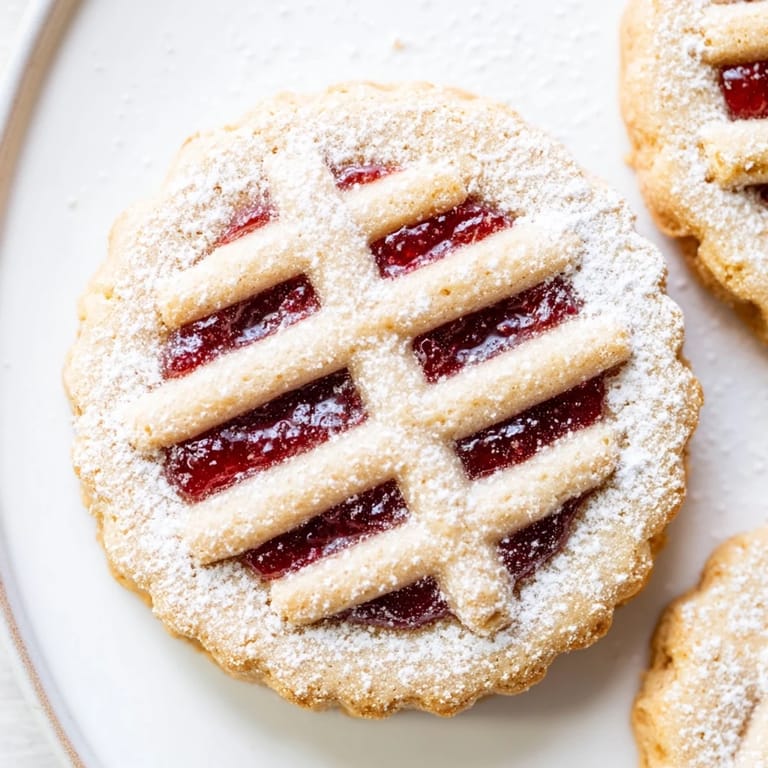
Save There's something about the ritual of making Linzer cookies that stops time in the kitchen. My grandmother had a worn wooden box filled with these delicate sandwiches, their jam centers glowing like stained glass when held up to the winter light. The first time I tried making them myself, I was terrified of cutting those perfect little windows, worried I'd ruin the dough. But once the oven filled with that buttery, almond-scented warmth, I realized these cookies weren't meant to be precious—they were meant to be shared, imperfectly beautiful and wholly worth the effort.
I learned the power of these cookies when I brought a tin to a neighbor who'd just had surgery. She called me three days later just to say she'd eaten the last one with her morning coffee, and somehow that small moment made the whole recipe feel less like dessert and more like kindness wrapped in pastry. That's when I understood why people keep Linzer recipes in their families for generations.
Ingredients
- All-purpose flour (2 cups): This is your structure; don't skip sifting it with the other dry ingredients to avoid lumps that'll show up later.
- Almond flour (1 cup, finely ground): This is where the magic happens—toasted almonds create that subtle, nutty depth that makes people ask what's different about your cookies.
- Ground cinnamon (1/2 teaspoon): Just a whisper; too much will overpower the delicate jam filling and almond flavor.
- Salt (1/4 teaspoon): Never skip salt in sweets—it's your secret weapon for making flavors pop.
- Unsalted butter (3/4 cup, softened): Temperature matters here; cold butter won't cream properly, and you'll lose that tender crumb.
- Powdered sugar (2/3 cup for dough, plus 1/4 cup for dusting): Powdered sugar dissolves into the dough invisibly, creating a silky texture regular sugar can't match.
- Egg yolk (1 large): Just the yolk binds without making the cookies tough; the white would add unwanted moisture.
- Vanilla extract (1 teaspoon): Use real vanilla; imitation won't give you that warm, rounded flavor these cookies deserve.
- Lemon zest (1/2 teaspoon, grated): This bright note brightens the jam filling and cuts through richness in a way people won't be able to name.
- Seedless raspberry jam (3/4 cup): Quality matters—a thin, loose jam will leak out, while something too thick won't spread easily when the cookies are warm.
Tired of Takeout? 🥡
Get 10 meals you can make faster than delivery arrives. Seriously.
One email. No spam. Unsubscribe anytime.
Instructions
- Mix the dry foundation:
- In a medium bowl, whisk flour, almond flour, cinnamon, and salt together. The whisking aerates the flour and distributes the cinnamon evenly so you don't get pockets of spice.
- Cream butter and sugar:
- Beat softened butter and powdered sugar until it's pale and fluffy—about 3 minutes with an electric mixer. This step incorporates air that makes the final cookies tender, not dense.
- Build the dough:
- Add egg yolk, vanilla, and lemon zest to the butter mixture and beat until combined. The yolk acts as a gentle binder while the lemon adds brightness that complements jam perfectly.
- Bring it together:
- Gradually add dry ingredients to wet, mixing just until a dough forms. Overmixing develops gluten and makes the cookies tough instead of tender.
- Chill the dough:
- Divide in half, flatten into disks, wrap in plastic, and refrigerate at least 1 hour. Cold dough won't spread in the oven and holds those delicate cutouts sharp.
- Prepare to bake:
- Preheat oven to 350°F and line two baking sheets with parchment paper. This prevents sticking and ensures even, gentle heat from below.
- Roll with confidence:
- On a lightly floured surface, roll one dough disk to 1/8 inch thickness. If it gets warm and sticky, pop it back in the fridge for 10 minutes.
- Cut the cookies:
- Using a 2-inch round or fluted cutter, cut out cookies. For every bottom piece, you'll need a top piece with a 1-inch window cut from the center—this is where the jam shows through like a jewel.
- Bake until golden:
- Bake for 10–12 minutes until edges are lightly golden. They'll seem soft when warm—that's perfect; they firm up as they cool.
- Cool completely:
- Let cool on the pan for 2 minutes, then transfer to a wire rack. Patience here prevents the jam from melting into warm cookies.
- Dust and fill:
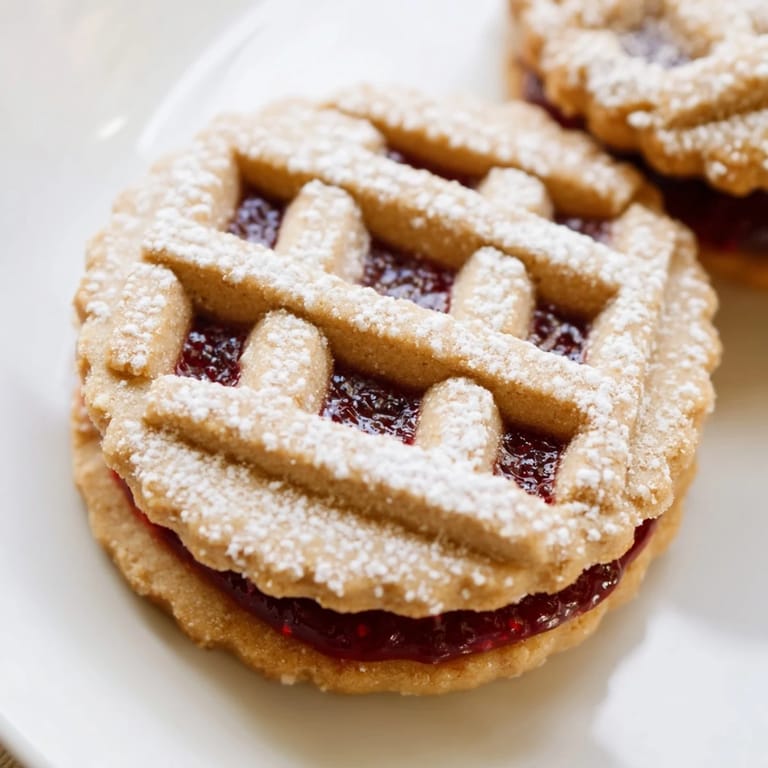
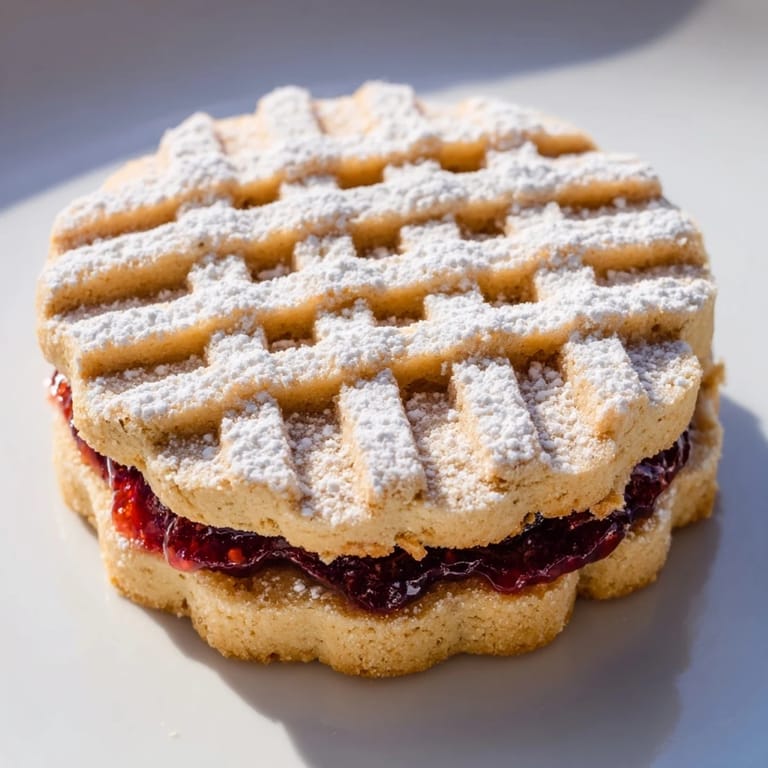
- Once cooled, sift powdered sugar over the top cookies, then spread about 1 teaspoon of jam on each bottom cookie. Top with sugared pieces.
- Let them rest:
- Wait at least 30 minutes before serving so the jam sets and the sandwich holds together with every bite.
 Save
Save I discovered the true purpose of these cookies when my daughter helped me cut the windows one December afternoon, and she held each one up to the kitchen light like a stained glass window. In that moment, they stopped being just cookies and became something we'd made together, something she'll probably recreate for her own kitchen someday.
The Almond Factor
Almond flour is the backbone of an authentic Linzer cookie, and it's worth buying blanched instead of trying to grind whole almonds yourself. The texture difference is real—blanched almond flour creates a finer crumb that melts on your tongue, while whole almonds leave little flecks that feel gritty. I learned this the hard way by processing almonds in a food processor and ending up with cookies that felt more like little nut bricks than tender pastries.
Jam Selection and Storage
The jam makes or breaks the final cookie, and seedless raspberry is traditional for a reason—it spreads smoothly and sets firmly without little seeds getting in your teeth. That said, I've had success with apricot when I wanted something less tart, and blackcurrant when I was feeling adventurous. Store your finished cookies in an airtight container with parchment between layers, and they'll keep for 5 days, though honestly they never last that long in my house.
Variations and Flexibility
Once you master the base recipe, these cookies invite experimentation in the best way. The dough is forgiving, the shape is flexible, and the filling is endlessly customizable. I've seen bakers use lemon curd, dulce de leche, and even dark chocolate ganache with remarkable results.
- For a nut-free version, simply replace the almond flour with all-purpose flour and add an extra 1/4 teaspoon of vanilla for depth.
- If you want to dress them up more, try adding a thin layer of melted dark chocolate under the jam for unexpected richness.
- Experiment with lemon or orange zest in the dough to add brightness that plays beautifully against tart jams.
 Save
Save These cookies are the kind worth making, the kind that ask for time and attention but give back tenfold in the joy of sharing them. Make a batch when you have an afternoon to yourself, and I promise you'll understand why people keep coming back to this recipe.
Recipe FAQs
- → What gives Linzer cookies their unique texture?
The blend of all-purpose flour and finely ground blanched almonds creates a tender, slightly crumbly texture with rich buttery notes.
- → How do I create the lattice pattern on the cookies?
Use a smaller round or fluted cutter to cut out center shapes from half the cookies before baking, which creates a window for the raspberry filling.
- → Can I substitute the raspberry jam with other fillings?
Yes, apricot or blackcurrant preserves work well as variations, providing different fruity flavors while maintaining the classic balance.
- → What is the purpose of chilling the dough before baking?
Chilling firms the dough, making it easier to roll and cut precise shapes, and helps maintain the cookies' structure during baking.
- → How should Linzer cookies be stored for best freshness?
Keep them in an airtight container at room temperature for up to five days to preserve the texture and flavor.