 Save
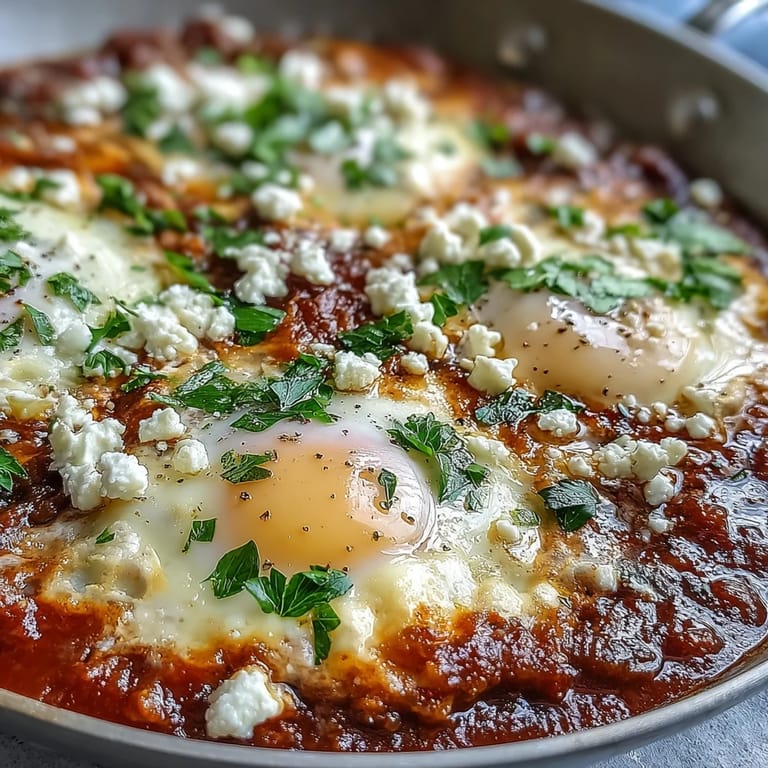
Save My neighbor Sarah handed me a warm bowl of shakshuka through her kitchen window one morning, steam rising straight into the cool air, and I was instantly hooked. That first spoonful—the way the runny yolk broke into the spiced tomato sauce, creating this creamy richness—felt like a small revelation at 8 AM. She'd learned it from her grandmother in Morocco, and watching her make it casually, without measuring anything, taught me that this dish thrives on intuition and doesn't demand perfection. Now it's my go-to when I want breakfast to feel like an event, not just fuel.
I made this for my roommate's birthday brunch last spring, and something unexpected happened—we all sat at the table longer than planned, just breaking bread together and talking. The shakshuka became an excuse to linger, to slow down. That's when I realized this dish has a way of turning breakfast into something social, even if you're cooking it alone. There's something about the warm, fragrant sauce and those perfectly runny eggs that makes everyone want to stay a little longer.
Ingredients
- Olive oil (2 tbsp): Use a good quality oil if you can—it's one of the few ingredients where you'll taste the difference, and it carries all those spice flavors beautifully.
- Onion and red bell pepper: The onion sweetens as it cooks, and the pepper adds color and a gentle sweetness that balances the spices; dice them roughly the same size so they cook evenly.
- Garlic (3 cloves, minced): Don't skip the mincing—whole or chunky garlic tastes harsh here, but finely minced garlic melts into the sauce and becomes almost creamy.
- Crushed tomatoes (28 oz can): Canned tomatoes are actually better than fresh here because you want body and consistency; San Marzano varieties are particularly good if you see them.
- Chili pepper (optional): Just a small amount brings a gentle warmth that builds in the background; I learned the hard way that a whole hot pepper makes it too fiery for most people.
- Cumin, paprika, and coriander: These three are the holy trinity of shakshuka spicing; they should smell warm and toasty when you open the jars, not dusty and old.
- Cayenne pepper: Leave this optional until you know how your guests feel about heat; you can always add more but you can't take it out.
- Large eggs (4): Fresher eggs hold their shape better in the sauce, so check your carton date if you want those beautiful intact yolks.
- Fresh parsley or cilantro: Don't skip this—it brightens everything and makes the dish feel alive, plus it's where people really notice whether you cared about the details.
- Feta cheese (optional): Crumbled feta adds a salty, tangy note that plays beautifully with the tomato sweetness; if you don't have it, a dollop of Greek yogurt works too.
Tired of Takeout? 🥡
Get 10 meals you can make faster than delivery arrives. Seriously.
One email. No spam. Unsubscribe anytime.
Instructions
- Warm your oil and start the vegetables:
- Pour olive oil into your skillet and let it heat over medium until it's shimmering—you'll see a slight ripple across the surface. Add your diced onion and bell pepper, then listen for that gentle sizzle; it means you're at the right temperature and the vegetables are beginning to soften instead of steaming.
- Build the aromatics:
- After about 6 minutes, when the onions are turning translucent and soft, add your minced garlic and chili pepper. Stir constantly for just about a minute—you want the garlic to release its fragrance into the oil, but not brown, because browned garlic turns bitter and changes the whole character of the dish.
- Create the sauce foundation:
- Pour in your crushed tomatoes along with the cumin, paprika, coriander, cayenne, salt, and pepper. Everything should come together into a bright, fragrant mixture that smells warm and inviting. Stir it all together, making sure the spices are distributed evenly so you don't get pockets of concentrated flavor.
- Let it simmer and thicken:
- Turn the heat down slightly and let the sauce bubble gently, uncovered, for 10 to 12 minutes. Stir it every couple minutes, and you'll watch the sauce transform from watery and bright to rich and velvety as the tomato reduces. You want it thick enough that when you drag your spoon through it, there's a brief moment before the sauce flows back together.
- Make room for the eggs:
- Using the back of your spoon, gently push the sauce to create four small wells—think of them as little nests where your eggs will sit. Space them evenly around the pan so they cook at the same rate.
- Crack and nestle the eggs:
- Crack each egg into a small bowl first, then gently slide it into a well; this prevents shells from ending up in your sauce and gives you more control. You'll see the whites immediately start to set as they hit the heat.
- Cover and cook until just right:
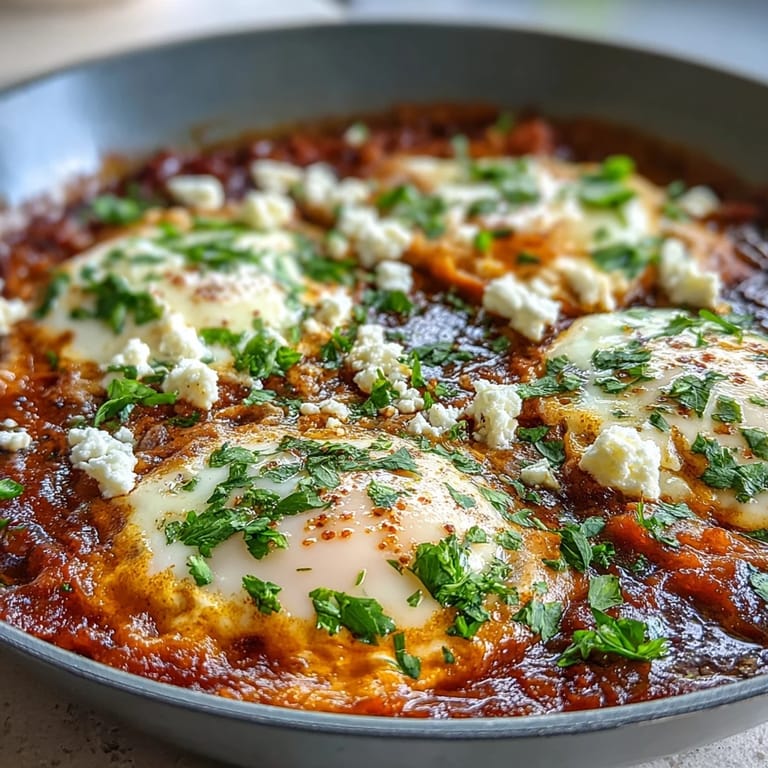
- Put the lid on your skillet and turn the heat down to medium-low or low—you want the gentlest simmer, not aggressive bubbling. Check after 5 minutes by lifting the lid carefully; the whites should be opaque and set, but if you gently jiggle the pan, the yolks should move slightly. This takes 6 to 8 minutes depending on your stove, but err on the side of less rather than more because the eggs keep cooking even after you turn off the heat.
- Finish and serve:
- Remove from heat, scatter your fresh herbs and crumbled feta over the top, and serve immediately with warm bread for scooping up every bit of that incredible sauce. The moment between when you finish and when you plate it matters—serve it hot while the eggs are still silky.
 Save
Save I once made shakshuka for someone who'd been having a rough week, and they ate two bowls in complete silence before looking up and saying it was exactly what they needed. Something about a warm, spiced egg dish seems to meet people where they are, whether they need comfort or celebration. That's stayed with me.
The Magic of Spice Balance
The first time I made this, I was timid with the spices and ended up with something that tasted mostly like tomato sauce with eggs in it. A friend tasted it and gently suggested I wasn't being brave enough with the cumin and paprika, and when I made it again with a heavier hand, everything clicked. The spices aren't meant to overpower—they're meant to weave through the sauce and create this warm, almost cozy flavor that builds as you eat. Think of them as a conversation rather than a shout.
Bread, Not Optional
You really do need bread—crusty, warm, something that can soak up all that incredible sauce without falling apart. I've tried eating shakshuka without bread, thinking I'd save the calories or be more decisive, and it felt incomplete. The bread isn't a side; it's part of the dish. Whether it's pita, sourdough, or flatbread, it transforms the experience from eating something to having a moment.
Variations and Why They Work
Once you understand the core of shakshuka, you can play with it. Roasted red peppers swap in beautifully for fresh ones if you want something sweeter and less sharp. A pinch of smoked paprika adds depth that makes people pause and ask what that flavor is. Harissa paste stirred in at the end brings a complex heat that feels more sophisticated than just cayenne. The beauty is that this dish is forgiving enough to welcome your experiments but structured enough that it always tastes intentional.
- Sautéed chickpeas or crumbled tofu transforms this into something fully vegan and just as satisfying as the egg version.
- A dollop of Greek yogurt on top adds creaminess if you don't have feta or prefer something tangier.
- Try it with spinach or other greens stirred in during the final simmering for extra nutrition without changing the core flavors.
 Save
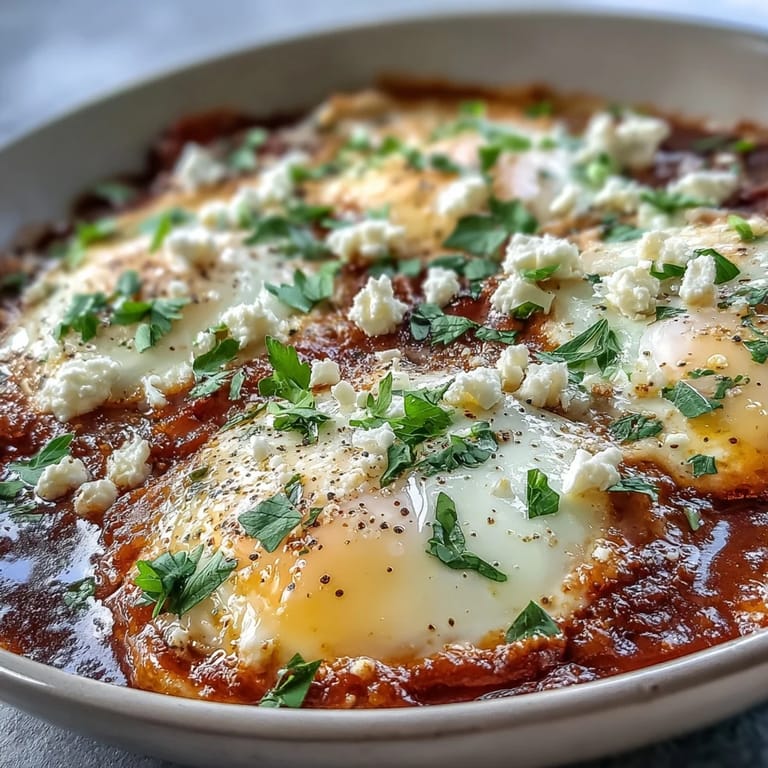
Save Shakshuka taught me that the simplest dishes often contain the most generosity—one pan, a handful of spices, eggs, and suddenly you've created something that feels like home. Make it for yourself on a quiet morning, or make it to gather people around your table. Either way, you're doing it right.
Recipe FAQs
- → What is the traditional way to serve shakshuka?
Shakshuka is traditionally served directly from the cooking pan, family-style, with warm crusty bread, pita, or flatbread for dipping into the sauce and runny yolks.
- → How do I know when the eggs are perfectly cooked?
The eggs are ready when the whites are fully set and opaque, but the yolks still jiggle slightly when the pan is gently shaken. This typically takes 6-8 minutes covered.
- → Can I make shakshuka ahead of time?
The tomato sauce base can be made 1-2 days ahead and refrigerated. Reheat gently before adding eggs and finishing the dish. However, it's best enjoyed immediately after cooking.
- → What variations can I try with this dish?
Add roasted red peppers for sweetness, harissa or smoked paprika for depth, or top with crumbled feta. For vegan versions, substitute eggs with sautéed tofu or chickpeas.
- → Why is my tomato sauce too watery?
Simmer the sauce uncovered for 10-12 minutes until it thickens noticeably. The sauce should be rich and coat the back of a spoon before adding eggs.
- → What type of pan works best for shakshuka?
A large cast-iron skillet or deep sauté pan with a lid distributes heat evenly and goes from stovetop to table beautifully. The lid is essential for properly steaming the eggs.