 Save
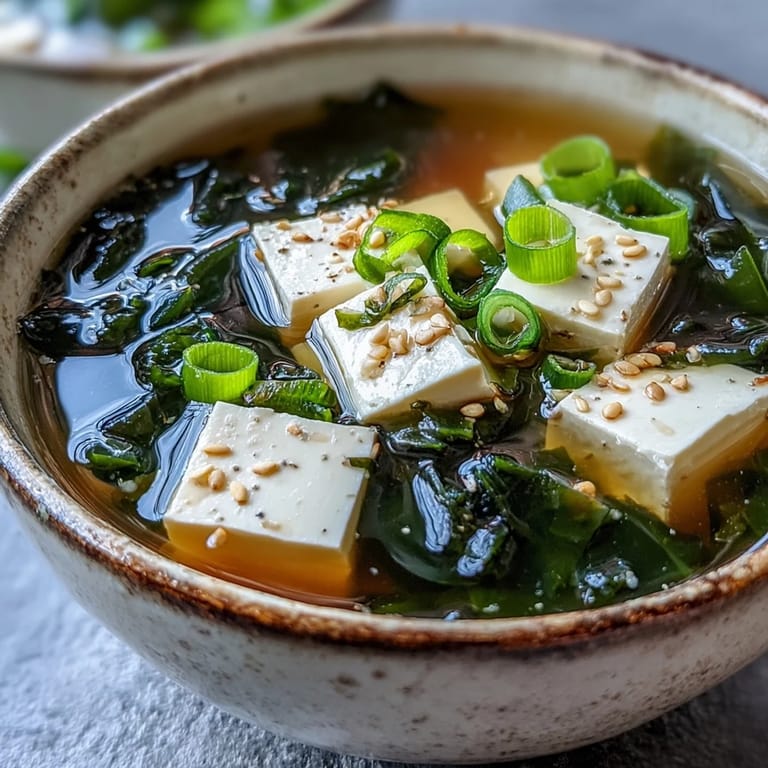
Save Miso soup is a cornerstone of traditional Japanese cuisine, offering a warm and savory experience that is as comforting as it is nutritious. This recipe for Miso Soup With Tofu combines probiotic-rich miso paste with delicate cubes of silken tofu and tender seaweed, creating a light yet satisfying dish that is perfect as a starter or a healthy light meal.
Save The beauty of this soup lies in its simplicity. By using a handful of authentic ingredients, you can recreate the subtle, earthy flavors of a Japanese kitchen in your own home. It’s an ideal recipe for those seeking a gentle, warming dish that supports digestive health.
Ingredients
Tired of Takeout? 🥡
Get 10 meals you can make faster than delivery arrives. Seriously.
One email. No spam. Unsubscribe anytime.
- Broth: 4 cups (1 liter) dashi stock (use vegetarian dashi for a plant-based option)
- Miso Paste: 3 tablespoons white or yellow miso paste
- Tofu: 200 g (7 oz) silken tofu, cut into 1/2-inch cubes
- Seaweed: 2 tablespoons dried wakame seaweed
- Garnish: 2 scallions (spring onions), finely sliced
Instructions
- Step 1
- In a medium saucepan, bring the dashi stock to a gentle simmer over medium heat.
- Step 2
- While the stock is warming, soak the dried wakame seaweed in a small bowl of cold water for 5 minutes, then drain and set aside.
- Step 3
- Place the miso paste in a small bowl. Add a ladleful of hot dashi and whisk until smooth and dissolved.
- Step 4
- Gently add the tofu cubes and soaked wakame to the simmering dashi. Heat for 2–3 minutes until warmed through, being careful not to break the tofu.
- Step 5
- Remove the soup from heat. Stir in the dissolved miso paste (do not boil after adding miso, to preserve probiotics and flavor).
- Step 6
- Ladle into bowls and garnish with sliced scallions. Serve immediately.
Zusatztipps für die Zubereitung
When preparing the miso paste, ensure you whisk it thoroughly in a separate small bowl with a bit of warm dashi first. This prevents clumps and ensures a smooth, consistent broth texture. Always use silken tofu for this soup to achieve the traditional soft, melting texture.
Varianten und Anpassungen
For extra variety, consider adding thinly sliced mushrooms or fresh spinach during the simmering stage. If you prefer a more robust flavor, try mixing equal parts of white and red miso paste. For a strictly vegan version, ensure your dashi is made from kombu and shiitake mushrooms.
Serviervorschläge
This miso soup pairs exceptionally well with a side of steamed white rice or a simple green salad with a ginger dressing. For a complete Japanese-inspired meal, serve it alongside grilled fish or pickled vegetables.
 Save
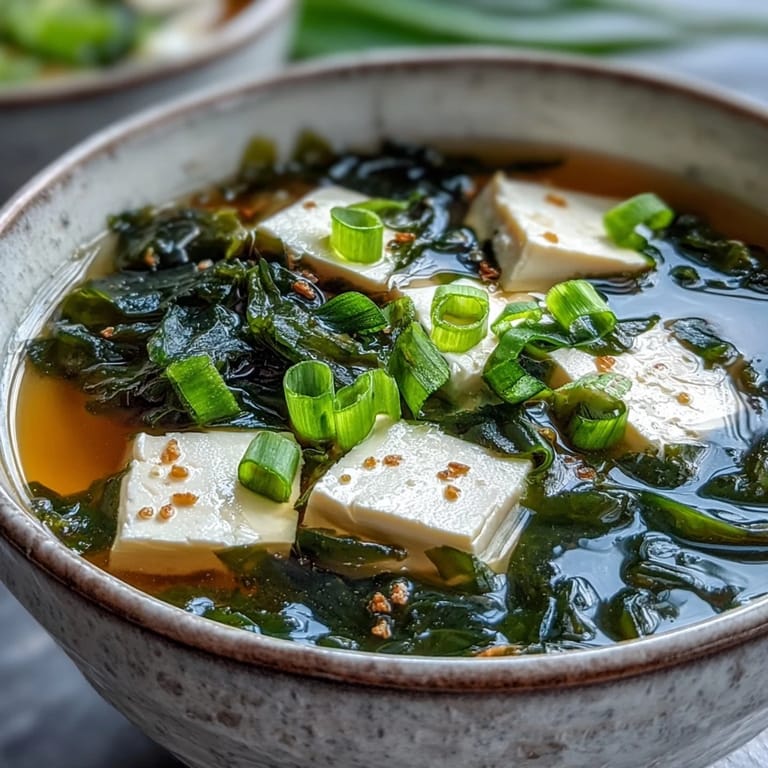
Save Enjoy this homemade Miso Soup With Tofu as a daily ritual or a special starter. Its clean flavors and nourishing properties make it a timeless addition to any recipe collection.
Recipe FAQs
- → What type of miso works best?
White or yellow miso paste offers a milder, sweeter flavor ideal for beginners. Red miso provides deeper, more intense umami. Mix both varieties for added complexity and depth in your broth.
- → Why shouldn't I boil miso?
Boiling miso paste destroys beneficial probiotics and enzymes while creating an overly salty, bitter taste. Always remove broth from heat before stirring in dissolved miso to preserve both nutrition and delicate flavor nuances.
- → Can I make this vegan?
Absolutely. Use vegetarian dashi made from kombu seaweed and dried shiitake mushrooms instead of traditional bonito-based stock. All other ingredients including miso, tofu, and wakame are naturally plant-based.
- → How long does miso soup last?
Store leftovers refrigerated in an airtight container for 2-3 days maximum. Reheat gently without boiling to maintain texture and beneficial properties. Note that tofu may become slightly firmer after refrigeration.
- → What can I add for more substance?
Thinly sliced shiitake mushrooms, fresh spinach, snow peas, or cooked noodles transform this into a heartier meal. Add a soft-boiled egg or leftover shredded chicken for extra protein if desired.
- → Is silken tofu necessary?
Silken tofu provides the traditional delicate texture, but firm tofu works if that's what you have. Cut firm tofu into smaller cubes and handle gently to prevent breaking during simmering.