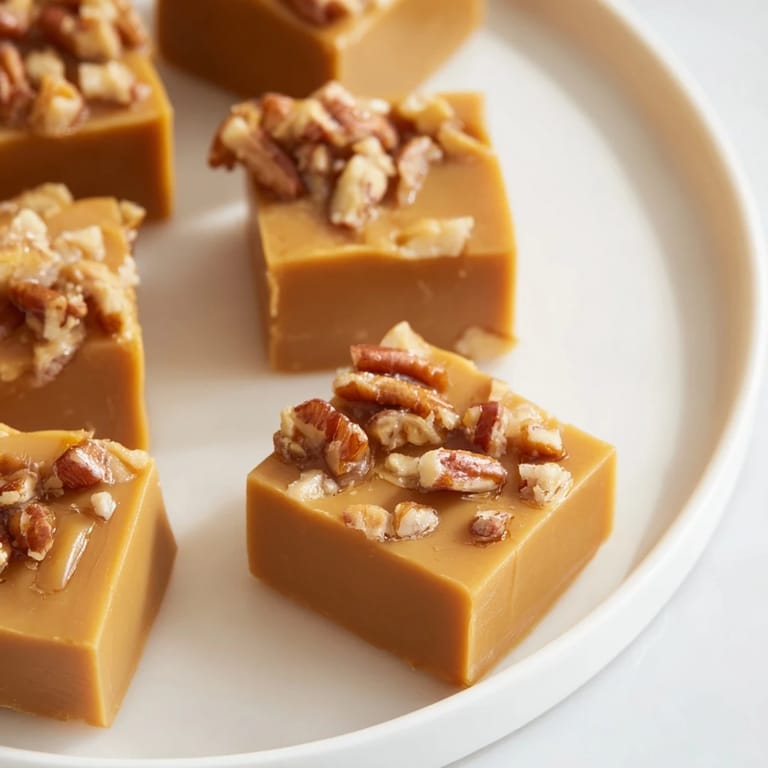
 Save
Save My grandmother kept a worn wooden spoon in a drawer labeled just for fudge, and I didn't understand why until I made penuche for the first time at her kitchen counter. That spoon had scratches and stains from decades of beating hot sugar into submission, and when I held it, I felt the whole history of winter afternoons and gift boxes tied with ribbon. Brown sugar fudge isn't flashy or complicated, but it has this quiet richness that makes people slow down when they taste it, and that's when I knew this recipe deserved a permanent place in my own kitchen.
I brought a batch to a pottery class I was taking, and a woman who barely spoke all semester lit up and asked for the recipe on the spot. We spent the next week talking about brown sugar versus white sugar, and she came back with her own version made with maple extract. That's when I realized fudge is one of those perfect foods that invites people into the kitchen with you, even if they've never made candy before.
Ingredients
- Light brown sugar (2 cups, packed): This is the soul of the recipe—packed brown sugar gives you that deep molasses flavor that makes penuche different from regular fudge, and I learned the hard way that loose brown sugar will throw off your temperature readings.
- Granulated sugar (1 cup): It balances the molasses notes and helps you hit that perfect soft-ball stage without the mixture becoming grainy.
- Whole milk (3/4 cup): Whole milk creates that silky texture, and skimming corners here is where most people end up with fudge that's either too soft or too stiff.
- Unsalted butter (1/2 cup, cut into cubes): Cutting it into pieces helps it melt evenly into the sugar mixture, and using unsalted lets you control the salt yourself.
- Fine sea salt (1/4 tsp): Just enough to wake up the caramel flavors without making it taste salty.
- Pure vanilla extract (1 1/2 tsp): Vanilla is what gives the final fudge that warm, rounded flavor that makes people want another piece.
- Chopped pecans or walnuts (1 cup, optional): Nuts add a gentle crunch and earthiness, but honestly, the fudge is perfect either way.
Tired of Takeout? 🥡
Get 10 meals you can make faster than delivery arrives. Seriously.
One email. No spam. Unsubscribe anytime.
Instructions
- Prepare your pan:
- Line an 8-inch square pan with parchment paper, letting the edges overhang so you can lift the finished fudge out like a treasure. Butter the paper lightly so nothing sticks.
- Combine and dissolve:
- In a heavy-bottomed saucepan, mix both sugars, milk, butter cubes, and salt over medium heat. Stir gently as everything melts together, watching the mixture turn from grainy to smooth and glossy.
- Cook to soft-ball stage:
- Clip your candy thermometer to the side of the pan and stop stirring once the mixture starts to boil. Watch it climb to 238°F—this takes about 10 to 12 minutes, and you'll see the bubbles get slightly larger and the color deepen to a medium caramel.
- Cool and rest:
- Pull the pan off heat and let it sit untouched for exactly 10 minutes. This cooling period is where the magic happens, and I promise your patience here makes a difference in the texture.
- Beat it into submission:
- Add vanilla and start beating with a wooden spoon or electric mixer on low speed, scraping the sides often. After about 5 to 8 minutes, you'll feel it change—the mixture will thicken, lose its shine, and start to look grainy and hold peaks when you lift the spoon.
- Add nuts if using:
- Fold in chopped pecans or walnuts gently, just a few turns so they're distributed without breaking them up.
- Pour and set:
- Work quickly now—pour everything into your prepared pan and smooth the top with a spatula. Let it set at room temperature for at least an hour until it's firm enough to cut.
- Cut and store:
- Lift the whole slab out using the parchment overhang and cut into 1-inch squares with a sharp knife, wiping the blade between cuts for clean edges.
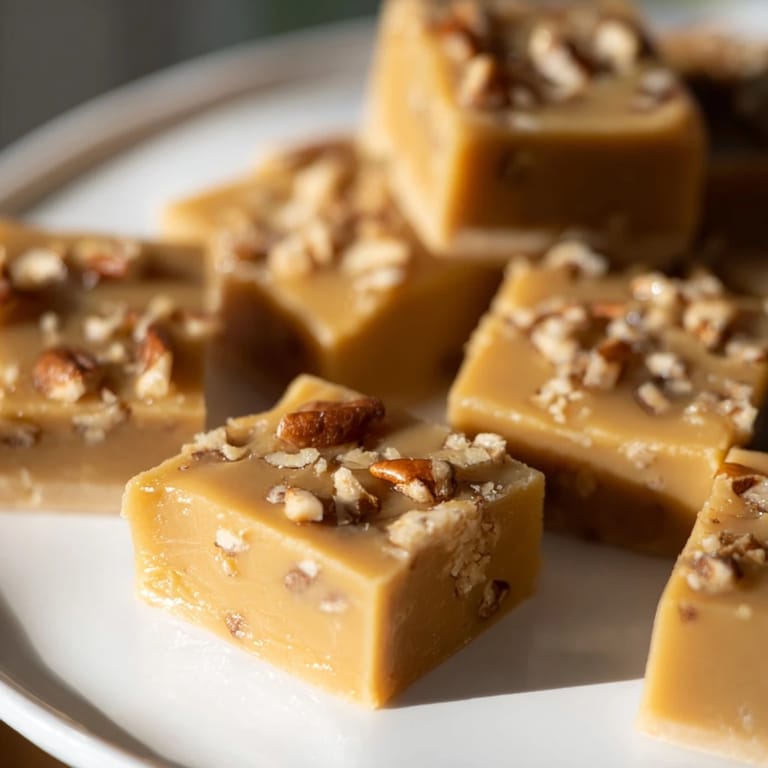 Save
Save My neighbor used to make this exact fudge every December, and she'd leave a box on my doorstep with a handwritten note about how much she loved our chats over the fence. After she moved away, I started making batches of penuche partly to keep her memory close, and partly because her kitchen science had become mine. Now when I beat the mixture until it thickens, I feel like she's there with her wooden spoon.
The Magic of the Soft-Ball Stage
Before I owned a candy thermometer, I used the water-drop test, which was honestly more ritual than science, and I made plenty of batch failures that taught me why professionals use thermometers. The soft-ball stage—238°F—is the narrow window where sugar syrup has cooked just enough to set into fudge but not so much that it becomes hard candy. Once you understand that the temperature is actually controlling the water content in the mixture, everything clicks into place. Getting here requires medium heat and patience, and rushing either one will betray you.
Why Beating Changes Everything
Beating the cooled mixture is what transforms hot glossy syrup into fudge that's smooth and snappable, and it's the step that separates homemade fudge from the stuff that spreads like warm icing. The beating creates tiny crystals, and controlling how small those crystals stay is the whole secret to texture. A wooden spoon works through sheer arm power, while an electric mixer at low speed gives you more control and a rest period, and both methods work—it just depends on whether you want a kitchen meditation or a quicker route to candy.
Brown Sugar and the Depth It Brings
Using brown sugar instead of all white sugar is the decision that makes penuche penuche, and it's where the molasses sweetness comes from that tastes like caramel but sweeter. I've tried half brown and half white, and it was good but not quite right, so I trust the 2-to-1 ratio in this recipe because it's been earned through trial. The brown sugar needs to be packed down so you're actually measuring the molasses and sugar together, not just airy brown crystals that won't dissolve properly.
- Always sift brown sugar that's hardened in the bag before measuring, or it won't pack correctly.
- Room temperature butter and milk help everything combine smoothly without temperature shock.
- If you're adding extracts beyond vanilla, add them after the cooling period so the heat doesn't cook off the flavor.
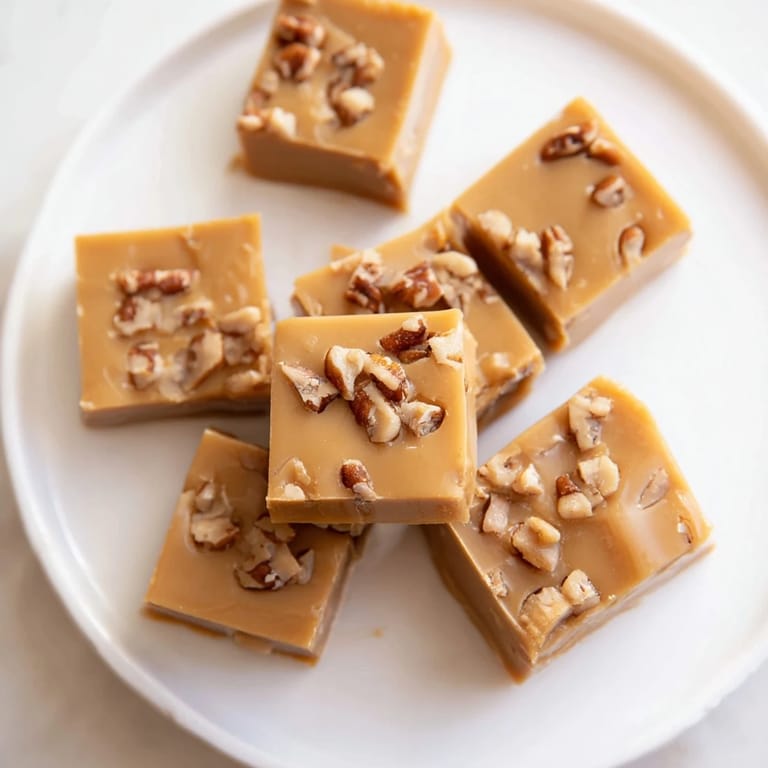 Save
Save Penuche fudge is proof that some of the best things in life come from a simple mix of brown sugar, milk, and butter heated to exactly the right temperature. Every batch you make teaches you something new about patience and precision, and that's worth celebrating.
Recipe FAQs
- → What gives this treat its caramel flavor?
The packed light brown sugar and careful cooking to the soft-ball stage create caramelized notes that define its flavor.
- → How is the creamy texture achieved?
After cooking, beating the mixture until thick ensures a smooth, melt-in-your-mouth consistency.
- → Can nuts be added or omitted?
Chopped pecans or walnuts can be folded in for added texture, or left out for a nut-free version.
- → What temperature should the mixture reach during cooking?
The mixture should be cooked to 238°F (114°C), the soft-ball stage, for proper setting.
- → How long does it take to set before cutting?
It should set at room temperature for at least one hour until firm enough to cut into squares.