 Save
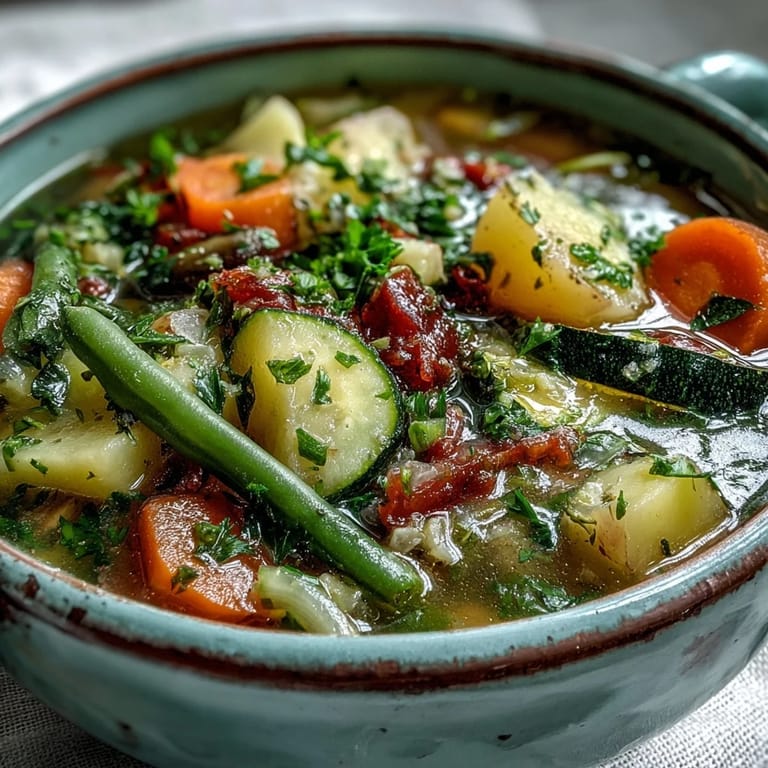
Save There's something about chopping vegetables on a quiet afternoon that makes you feel like you're doing something right. My neighbor knocked on the door one October with an armful of zucchini from her garden, and instead of letting them sit in the crisper drawer until they got soft, I pulled out a pot and started building this soup. Within an hour, the kitchen smelled like home, and she ended up staying for a bowl. That's when I realized this wasn't just about using up vegetables—it was about turning simple things into comfort.
I made this soup for my sister the night she told me she was moving across the country, and neither of us wanted to talk about it much. We just sat at the kitchen table with these big bowls, tearing bread into pieces and eating slowly. The soup was warm and unpretentious, exactly what we needed when words felt too heavy. Sometimes the best meals are the ones that give you permission to just be present.
Ingredients
- Potatoes: Three medium ones, peeled and cut into bite-sized chunks—they're the backbone of this soup, getting tender without turning to mush if you don't overcook them.
- Carrots: Two medium carrots sliced into half-moons add natural sweetness and a subtle earthiness that deepens as the soup simmers.
- Celery: Two stalks, diced fine, give the broth an aromatic foundation that nobody really notices but everyone would miss if it wasn't there.
- Onion: One medium onion, chopped, becomes the flavor base when it softens in the oil—don't skip the step of letting it cook until it turns translucent.
- Zucchini: One medium zucchini, diced, stays firm enough to hold its shape and adds subtle garden-fresh notes without overpowering anything.
- Green beans: A cup cut into one-inch pieces keeps the soup from feeling one-note texture-wise and adds a slight pop.
- Garlic: Two cloves, minced, wake everything up after just one minute of cooking—don't let it brown or it turns bitter and sad.
- Vegetable stock: Six cups is the right amount to make this a proper soup, not a stew or a broth—use the good kind if you can, because it actually matters here.
- Bay leaf: Just one, tucked in during cooking and removed before serving, adds a quiet herbal whisper to the whole pot.
- Dried thyme and parsley: One teaspoon each bring Mediterranean warmth without making the soup taste medicinal.
- Ground black pepper and salt: Half a teaspoon of pepper and a full teaspoon of salt, adjustable to your taste—add it slowly and taste as you go.
- Olive oil: Two tablespoons is enough to coat the pot and toast your vegetables without making this feel heavy.
- Frozen peas: One cup, stirred in at the end, adds color and sweetness right at the finish line.
- Fresh parsley: Optional, but worth it for a little brightness on top of each bowl.
Tired of Takeout? 🥡
Get 10 meals you can make faster than delivery arrives. Seriously.
One email. No spam. Unsubscribe anytime.
Instructions
- Build your base:
- Heat two tablespoons of olive oil in a large pot over medium heat, then add your chopped onion, carrots, and celery. Let them soften for about five minutes, stirring now and then—this is when the kitchen starts smelling like cooking, and you know something good is happening.
- Wake it up:
- Stir in your minced garlic and cook for just one minute until it becomes fragrant, being careful not to let it color or turn brown on the edges.
- Add the main players:
- Toss in your diced potatoes, green beans, and zucchini, then cook for two minutes while stirring, which helps everything get to know each other.
- Bring it together:
- Pour in all six cups of vegetable stock and add your bay leaf, thyme, parsley, salt, and pepper, then stir everything so the seasonings distribute evenly throughout the liquid.
- Let it simmer:
- Bring the soup to a boil, then lower the heat and cover it. Let it bubble gently for twenty to twenty-five minutes until the potatoes are fork-tender and the vegetables have softened but haven't lost their shape.
- Finish strong:
- Stir in your frozen peas and cook for two to three more minutes, then fish out that bay leaf and discard it before ladling the soup into bowls.
- Serve with intention:
- Ladle the soup into bowls, top with a sprinkle of fresh parsley if you're feeling it, and serve while it's hot with crusty bread on the side.
 Save
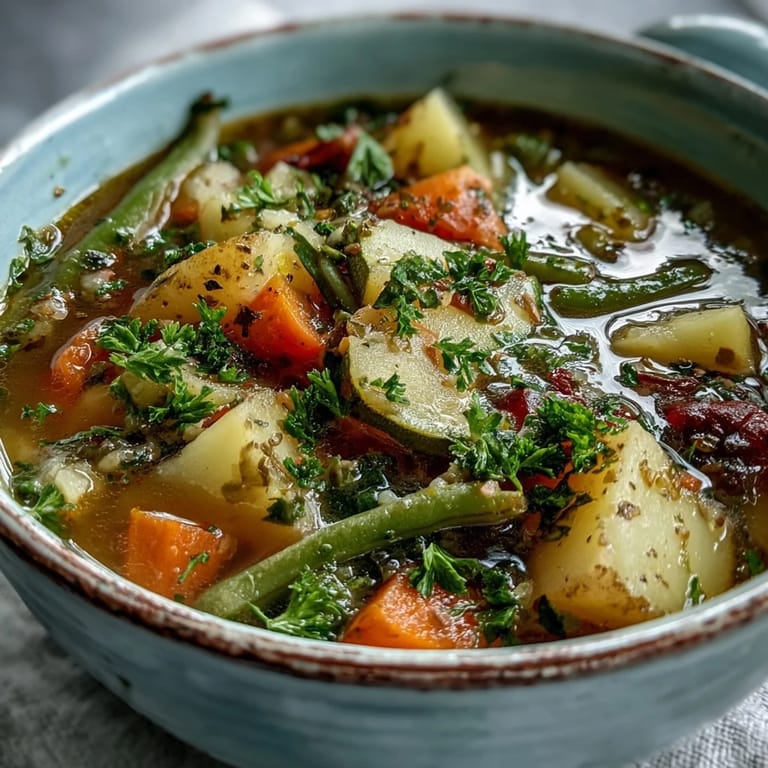
Save This soup taught me that cooking doesn't have to be complicated to feel meaningful. A pot, some vegetables, and time is all you really need to make something that brings people to the table.
When to Make This
This soup works any time of year, but it feels especially right when the weather turns cool and you want something that warms you from the inside. In summer, chill it and serve it cold if you want something different. In winter, it's the kind of meal that makes you grateful for your kitchen and your appetite.
Playing with Vegetables
The beauty of this soup is that it's forgiving about what vegetables you use. Corn tastes wonderful in here, as does spinach or kale stirred in at the very end. Bell peppers work, diced mushrooms add umami depth, and even diced tomatoes or a can of beans can take this in different directions without breaking anything.
Making It Your Own
Once you understand how this soup works, you can start improvising with confidence. The technique stays the same—soften your aromatics, add your vegetables in a sensible order, let the broth do the work—but the cast of characters can change depending on what you have and what you're craving. Some days I add a splash of cream before serving, other times a handful of grated cheese. For vegan versions, just make sure your stock is plant-based and skip the dairy.
- Taste the soup before you serve it and adjust seasoning one final time, because salt levels shift as things cook down.
- Leftover soup keeps for three days in the refrigerator and actually tastes better the next day once all the flavors have gotten to know each other.
- If you're making this for a crowd, double the recipe and use a larger pot, because somehow everyone wants seconds.
 Save
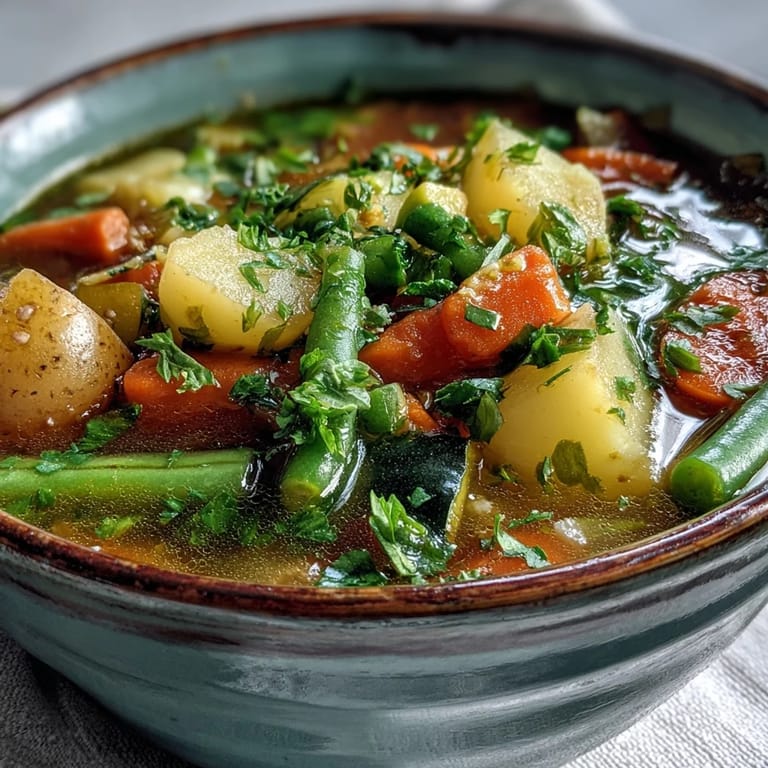
Save A good vegetable soup is like a good conversation—it doesn't need to be fancy, just honest and warm. Make this when you need to feed people or when you need to feed yourself.
Recipe FAQs
- → Can I use different vegetables in this soup?
Absolutely! This soup is very versatile. Try adding corn, spinach, kale, or any seasonal vegetables you have on hand. Just adjust cooking times based on the vegetables' tenderness.
- → How do I store leftover soup?
Store in an airtight container in the refrigerator for up to 4 days. Reheat on the stovetop over medium heat, adding a splash of stock if needed to thin it out.
- → Can I make this soup creamier?
Yes! Stir in a splash of heavy cream, coconut milk, or add a handful of grated cheese just before serving for a richer, creamier texture.
- → Is this soup freezer-friendly?
Yes, this soup freezes well for up to 3 months. Let it cool completely before transferring to freezer-safe containers. Thaw overnight in the refrigerator before reheating.
- → What can I serve with this soup?
Pair it with crusty bread, garlic toast, or a fresh green salad for a complete and satisfying meal. Crackers or breadsticks also make great accompaniments.
- → Can I make this in a slow cooker?
Yes! Sauté the aromatics first, then transfer everything to a slow cooker. Cook on low for 6-7 hours or high for 3-4 hours until vegetables are tender.