 Save
Save My neighbor knocked on my door one October afternoon with an armful of vegetables from her garden—carrots still dusty with soil, a sweet potato the size of my fist, bell peppers in shades of red and orange. She looked exhausted from the harvest and mentioned she didn't know what to do with it all. That's when I remembered my grandmother's trick of roasting vegetables until they turned sweet and caramelized, then turning them into soup. By evening, my kitchen smelled like autumn itself, and we were both sitting with steaming bowls, the kind that warm you from the inside out.
I made this for my daughter's first day back at university, sending her off with containers of it in her tiny dorm fridge. She called three days later saying she'd been rationing it carefully, reheating it on a hot plate, and that it tasted like coming home. That's when I realized soup isn't just food—it's a way of saying I'm thinking of you without having to say much at all.
Ingredients
- Carrots (2 medium): They sweeten beautifully when roasted, turning almost candy-like at the edges, so don't skip the caramelization step.
- Sweet potato (1 medium): This is what gives the soup its natural creaminess and subtle sweetness that you can't replicate any other way.
- Red bell pepper (1): It adds brightness and a faint sweetness that balances the earthiness of the other vegetables.
- Zucchini (1): This keeps things light and adds body without overpowering the other flavors.
- Red onion (1, quartered): The outer layers will caramelize into jammy sweetness if you don't peel them off, so leave a bit of papery skin on.
- Garlic (2 cloves): Roasting tames garlic's sharp edge and makes it mellow and almost nutty.
- Olive oil (2 tablespoons): Use decent quality here since it's a major player in bringing out the vegetables' natural sugars.
- Vegetable broth (4 cups): A good broth makes all the difference, so taste it first and choose one that's well-seasoned but not oversalted.
- Dried thyme (1 teaspoon): Thyme and roasted vegetables are a classic pairing for a reason.
- Dried rosemary (1 teaspoon): This adds a subtle pine-like depth that reminds you this came from actual plants.
- Smoked paprika (½ teaspoon): It adds a whisper of smokiness without overwhelming the delicate vegetable flavors.
- Salt and black pepper: Always taste and adjust at the end, as broth saltiness varies wildly between brands.
Tired of Takeout? 🥡
Get 10 meals you can make faster than delivery arrives. Seriously.
One email. No spam. Unsubscribe anytime.
Instructions
- Get your oven ready:
- Preheat to 425°F and line a baking sheet with parchment paper so cleanup is nearly effortless later.
- Prep and season the vegetables:
- Chop everything into roughly similar sizes so they roast evenly, toss with olive oil and seasonings, and spread them out in a single layer. Don't crowd them or they'll steam instead of caramelize.
- Roast until golden:
- Let them sit for 30 to 35 minutes, giving them a gentle stir halfway through so they brown evenly. You'll know they're done when the edges are caramelized and they smell irresistibly sweet.
- Build the soup:
- Scrape the roasted vegetables into a pot with the broth and let it simmer gently for 10 minutes so all those flavors meld together.
- Blend until silky:
- Use an immersion blender right in the pot and work slowly, or carefully transfer to a countertop blender in batches. The magic is in that smooth, velvety texture.
- Taste and finish:
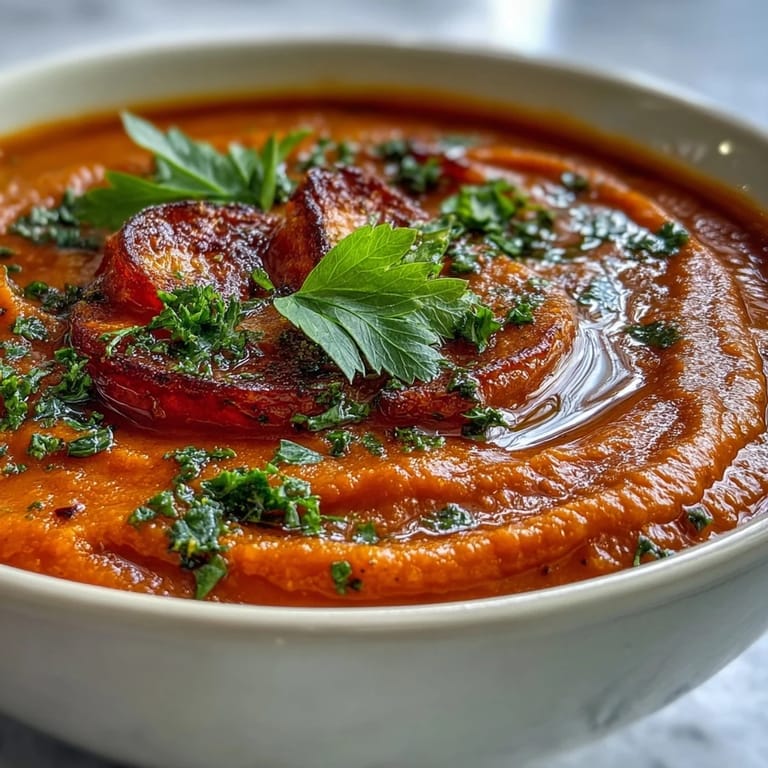
- Season with more salt and pepper if needed, ladle into bowls, and top with fresh parsley, a drizzle of good olive oil, and whatever garnish calls to you.
 Save
Save  Save
Save There's a moment when you're blending the soup and the whole pot suddenly turns into this beautiful burnt-orange color, and the steam rising up carries that perfect combination of garlic, rosemary, and caramelized vegetables. That's when you know you've got something special.
Swapping in Seasonal Vegetables
Fall and winter bring parsnips that turn almost honeyed when roasted, butternut squash that adds richness, and leeks that become incredibly mellow. Spring opens up possibilities with asparagus tips and fresh peas stirred in at the end, while summer is your moment to use any zucchini, summer squash, or even corn kernels you have lying around. The beauty of this soup is that it works with whatever your garden or farmer's market is offering, so treat the ingredient list as a starting point, not a rule.
Making It Creamier
If you want to push this toward something richer and more indulgent, stir in a splash of coconut milk right before blending, or use cream if you're not keeping it dairy-free. Some people swirl in a bit of tahini for body and a subtle nuttiness that nobody can quite put their finger on. The vegetable base is so good on its own that any additions just need to be gentle and thoughtful.
Storage and Make-Ahead Magic
This soup actually tastes better on day two or three because the flavors get a chance to really know each other. Store it in an airtight container in the fridge for up to three days, or freeze it in portions for up to two months. When reheating, go low and slow on the stove and add a splash of broth or water since it will have thickened—don't blast it in the microwave or you'll lose that velvety texture.
- Freezing in ice cube trays gives you single servings that thaw quickly whenever you need comfort in a bowl.
- Double the recipe and you'll have backup dinners waiting in your freezer for nights when you're too tired to cook.
- Let leftovers come to room temperature before refrigerating so condensation doesn't make everything watery.
 Save
Save 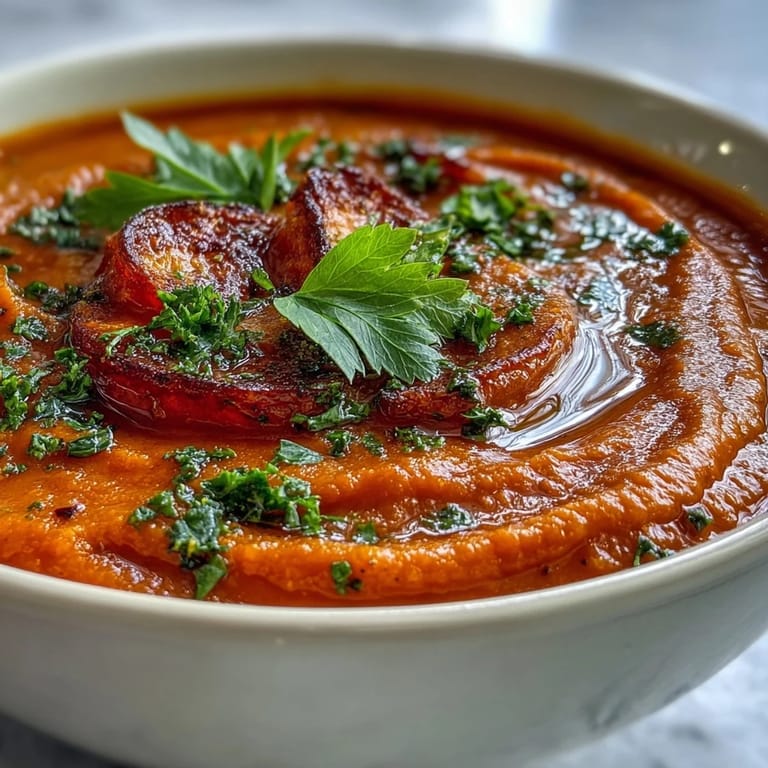 Save
Save This soup has become my answer to almost every question in the kitchen—what's for dinner, what do I bring to someone who's struggling, what do I make when I'm feeling nostalgic. It asks very little of you and gives back everything.
Recipe FAQs
- → Can I use different vegetables?
Absolutely! Feel free to swap in parsnips, butternut squash, leeks, cauliflower, or any seasonal vegetables you have available. The roasting technique works beautifully with most vegetables.
- → How do I make the soup creamier?
For extra creaminess, add a splash of coconut milk, heavy cream, or cashew cream before blending. You can also blend in a cooked potato for natural thickness without dairy.
- → Can I make this ahead of time?
Yes! This soup stores wonderfully in the refrigerator for up to 3 days and actually tastes better the next day as flavors meld. You can also freeze it for up to 3 months.
- → What if I don't have an immersion blender?
Use a regular countertop blender, working in batches. Let the soup cool slightly before blending, and be careful to vent steam by removing the center cap and covering with a towel.
- → How can I add more protein to this soup?
Top with roasted chickpeas, white beans, lentils, or serve alongside a grilled cheese sandwich. You can also stir in cooked quinoa or add a dollop of Greek yogurt when serving.
- → Why roast the vegetables instead of just boiling them?
Roasting caramelizes the natural sugars in vegetables, creating deeper, more complex flavors and a subtle smokiness that boiling cannot achieve. It transforms ordinary vegetables into something extraordinary.