 Save
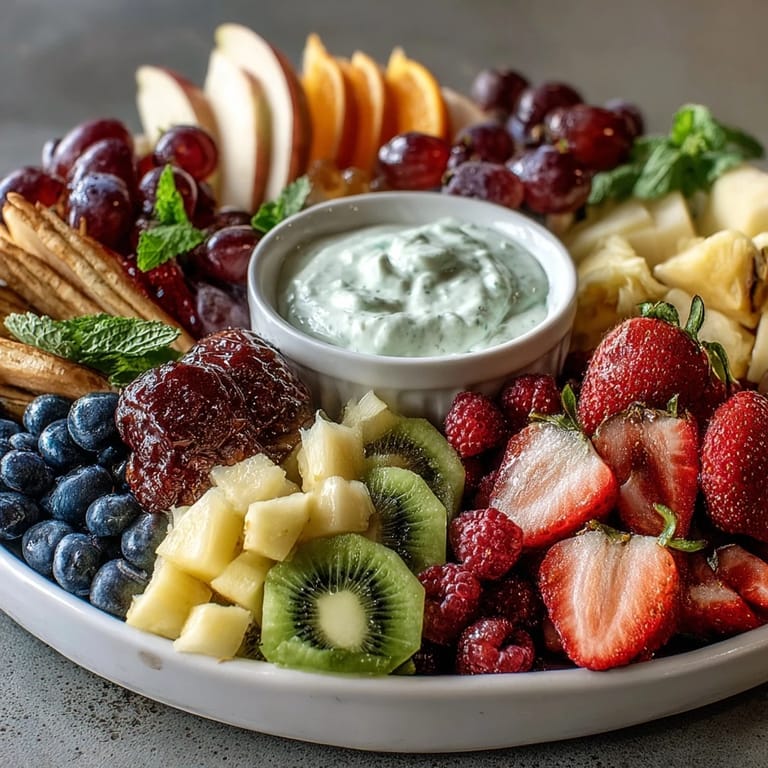
Save My neighbor knocked on the door one Saturday morning with a basket of strawberries from her garden, asking if I wanted to do something with them before they got too soft. That simple question led me to arrange a platter of spring fruits that became the centerpiece of an impromptu brunch—bright, effortless, and somehow more memorable than any dish I'd fussed over for hours. There's something about a fruit platter that makes people slow down, linger, and actually taste what they're eating. The honey-yogurt sauce I whipped together that day turned out to be the thing everyone asked about, creamy and bright with just enough lemon to feel sophisticated without any real effort.
I'll never forget serving this at a spring baby shower where my hands were already full with a dozen other things. Someone grabbed a strawberry and dipped it in the sauce, then their eyes lit up like I'd done something magical, when really I'd just been standing in my kitchen thinking about my neighbor and her garden. After that, friends started asking me to bring it to everything, which taught me that sometimes the simplest things are the ones people actually want to eat.
Ingredients
- Strawberries: Hull them just before assembling so they don't weep and turn the other fruits soggy.
- Blueberries: These stay fresh longer than other berries, so they're perfect for a platter that needs to sit for a bit.
- Pineapple: Cut it into bite-sized pieces so guests don't have to wrestle with chunks, and the sweetness balances the tartness of other fruits beautifully.
- Kiwis: Peel and slice these just before serving or they start to look tired and oxidized.
- Red grapes: Halving them makes them easier to eat with one hand while holding a small plate, and it exposes more surface area for that yogurt sauce.
- Mango: Choose one that yields slightly to pressure but isn't mushy, and the buttery texture adds richness to the platter.
- Apple and pear: Slice these closer to serving time and consider a light squeeze of lemon juice to keep them from browning.
- Orange: Segmenting it by hand looks more intentional than slices, and you avoid the bitter white pith that way.
- Greek yogurt: Plain or vanilla both work, but vanilla adds a subtle sweetness that feels intentional without being obvious.
- Honey: This is what makes the sauce taste less like diet food and more like an actual treat worth dipping into.
- Lemon zest and juice: The zest brings brightness and visual interest, while the juice prevents everything from tasting cloying.
- Vanilla extract: A whisper of this rounds out the sauce, but don't skip the lemon or it becomes too one-note.
Tired of Takeout? 🥡
Get 10 meals you can make faster than delivery arrives. Seriously.
One email. No spam. Unsubscribe anytime.
Instructions
- Prepare your fruits:
- Wash everything under cool running water and pat dry thoroughly with a clean kitchen towel—wet fruit just slides around and doesn't arrange nicely. Slice and segment each fruit as you go, keeping similar items together on your cutting board so you're not hunting for where you put the kiwis.
- Build your platter:
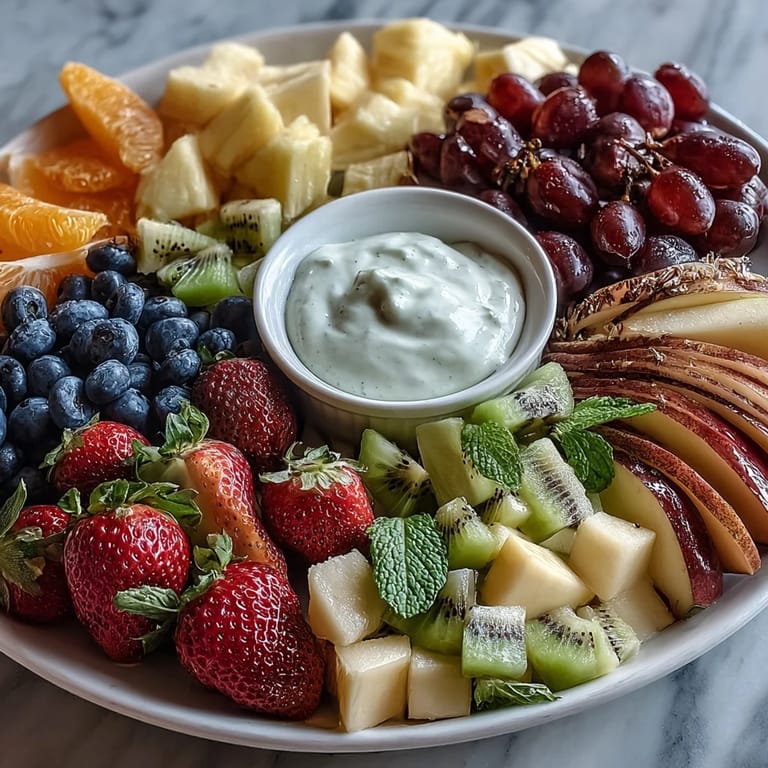
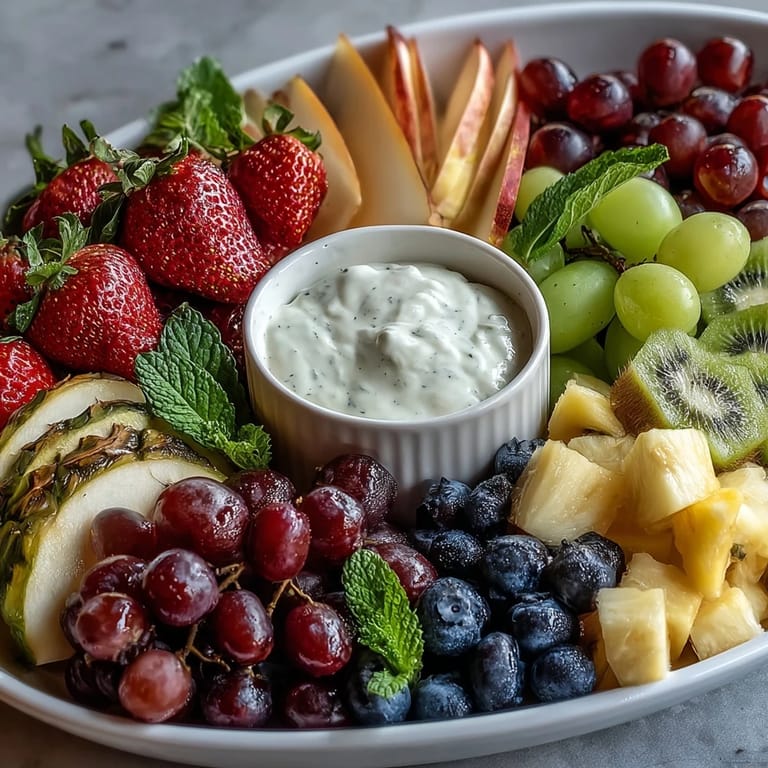
- Start with the largest pieces and work your way to smaller ones, grouping colors together in clusters rather than scattering everything randomly. Think of it like a painting where warm colors live near each other and cool colors do the same—it's more pleasing to the eye and somehow tastes better too.
- Make the sauce:
- Pour the yogurt into a small bowl and whisk in honey first so it dissolves and doesn't leave little lumps. Add lemon zest, lemon juice, and vanilla if you're using it, whisking until everything is smooth and creamy with no streaks.
- Bring it all together:
- Set the sauce bowl in the center of the platter or off to one side, depending on what feels balanced. If you're making this ahead, cover everything loosely with plastic wrap and refrigerate for up to two hours—any longer and the fruits start to release their juices.
 Save
Save What I love most about this platter is that it's been the thing that brought people together during transitions—spring afternoons when the weather suddenly feels warm, mornings when we're all still figuring out what season we're in. It's never the fanciest dish at the table, but somehow it's always the thing that disappears first.
The Secret to an Attractive Arrangement
The difference between a fruit platter that looks like an afterthought and one that looks intentional is really just about grouping and repetition. Odd numbers feel more natural than even ones, so put three strawberry halves together, then five blueberries nearby, rather than scattering them evenly. I learned this by accident when I ran out of space and had to bunch things together, and suddenly the platter looked ten times more elegant. Leave small gaps between color groups so your eyes have a place to rest and can actually appreciate each fruit individually.
When to Make This Ahead
The yogurt sauce is actually better made a few hours ahead because the flavors marry together and it becomes thicker and creamier as it sits. The fruits, though, are less forgiving—everything releases juice and things that were crisp become soft. I usually prep my fruits the morning of, keep them covered in the fridge, and then assemble the platter about thirty minutes before guests arrive, so everything is at its peak.
Ways to Personalize Your Platter
This is the beauty of a fruit platter—it's a canvas for whatever is in season or whatever you happen to have on hand. Last summer I added fresh raspberries and stone fruit, and in the winter I've done persimmons and pomegranate seeds. You can also play with the yogurt sauce by swapping lemon for lime, adding a tiny bit of ginger, or mixing in some fresh mint that you've muddled gently. Here's what I always keep in mind:
- Whatever extra you add should taste good with yogurt or it becomes the wrong note in the sauce.
- Garnishes like toasted coconut or crushed pistachios add texture but don't add them too far ahead or they get soggy.
- If you're doubling this for a larger crowd, make the proportional sauce in a bowl rather than trying to scale it in your head mid-whisking.
 Save
Save There's something deeply satisfying about putting together something beautiful that nourishes people, and this platter does exactly that with almost no stress on your part. Make it, set it out, and watch what happens when people see their choices laid out in front of them.
Recipe FAQs
- → What fruits are included in the spring fruit platter?
It includes strawberries, blueberries, pineapple, kiwis, red grapes, mango, apple, pear, and orange segments, offering a colorful and fresh selection.
- → How is the dipping sauce made?
The sauce combines Greek yogurt, honey, lemon zest, lemon juice, and vanilla extract, whisked together until creamy for a sweet and tangy flavor.
- → Can the fruit platter be prepared in advance?
Yes, you can arrange the fruits and prepare the sauce up to two hours ahead. Keep the platter covered and chilled to maintain freshness.
- → Are there any suggested garnish options?
Fresh mint leaves, toasted coconut flakes, or chopped nuts add extra flavor and texture when sprinkled over the platter.
- → Is there a vegan alternative for the sauce?
Substitute Greek yogurt with coconut yogurt and honey with maple syrup for a vegan-friendly dip option.