 Save
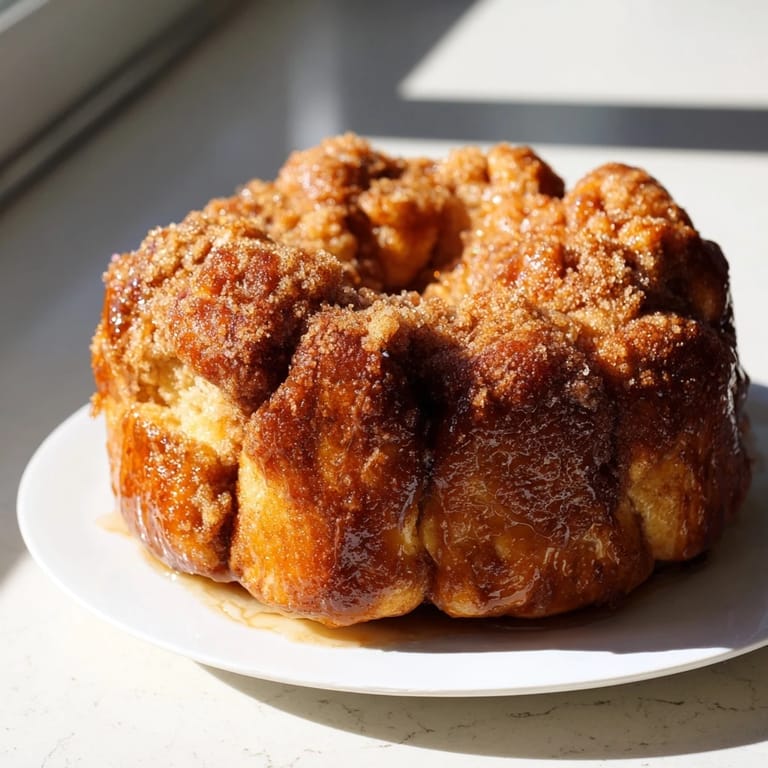
Save My kitchen smelled like cinnamon and butter for three days straight after I first made monkey bread at a friend's house while helping prep for a brunch gathering. I'd never heard of it before, but when she pulled that golden, sticky bundle from the oven and we all just grabbed at the strands without thinking twice, I understood the appeal instantly. There's something about food you're meant to pull apart with your hands that makes people relax and actually enjoy each other. I went home determined to master it, and now whenever I make it, the entire house fills with this warm, toasty smell that makes everyone ask what's baking before they even walk in the door.
I made this for my partner's family during a lazy Sunday morning, and I watched his mom reach for a third piece while pretending to help me clean up. She didn't say much, just kept coming back to the counter for one more pull, and I realized that's the whole point of this recipe—it's not fancy, it's just deeply satisfying.
Ingredients
- All-purpose flour (500 g): The foundation of a tender, slightly pillowy crumb that holds up to dipping and coating without falling apart.
- Instant dry yeast (7 g): The magic that makes this rise, and I've learned it's worth keeping a fresh container because old yeast means dense, disappointing dough.
- Granulated sugar for dough (60 g): Just enough to feed the yeast and subtly sweeten the bread itself, keeping it from tasting like pure butter and cinnamon.
- Salt (1 tsp): Don't skip this—it balances everything and keeps the flavor from becoming one-dimensional.
- Warm milk (180 ml): Use milk that feels hot to your wrist but not scalding, as overheating kills the yeast.
- Unsalted butter, melted (60 g for dough, 115 g for coating): Real butter is worth it here; it creates that rich, tender texture and that butter-and-cinnamon smell that keeps people coming back.
- Large eggs (2): These add richness and help bind everything together into a soft, workable dough.
- Cinnamon sugar coating (200 g sugar, 2 tsp cinnamon): This is where the magic happens—the proportions matter, and mixing them together first keeps the cinnamon from settling to the bottom.
- Powdered sugar glaze (120 g, optional): A drizzle of glaze adds sweetness and elegance, but honestly, warm monkey bread doesn't need it.
Tired of Takeout? 🥡
Get 10 meals you can make faster than delivery arrives. Seriously.
One email. No spam. Unsubscribe anytime.
Instructions
- Mix your dough base:
- Combine the flour, yeast, sugar, and salt in a large bowl, then add the warm milk, melted butter, and eggs all at once. Stir until everything comes together into a shaggy dough, then knead by hand or with a mixer for 5 to 7 minutes until it becomes smooth and elastic—you'll feel it transform under your hands.
- Let it rise for the first time:
- Move the dough to an oiled bowl, cover it loosely, and set it somewhere warm for about an hour until it's doubled in size. The warmth of your kitchen matters here—a cold kitchen means patience, a warm one means faster rising.
- Prepare your coating:
- While the dough rises, stir together the cinnamon and sugar in one bowl and pour the melted butter into another. Having everything ready now makes the next steps much smoother.
- Divide and shape the dough:
- Once the dough has doubled, punch it down gently (this is actually satisfying), then cut it into roughly 40 pieces and roll each one between your palms into a ball. Don't obsess over perfect size—slight variations actually look better in the final product.
- Coat each ball:
- Dip each ball into the butter, then immediately roll it in the cinnamon sugar and layer it carefully into a well-greased bundt pan. Work methodically so the coating sticks and the balls nestle together without leaving big gaps.
- Second rise:
- Cover the pan and let it sit for 20 to 30 minutes until the dough balls look slightly puffed and are starting to touch each other. They don't need to double here—just enough to puff slightly.
- Bake to golden:
- Heat your oven to 350°F (180°C) and bake for 30 to 35 minutes until the top is deep golden brown and smells incredible. A few minutes longer won't hurt if the center needs it—poke the middle and listen for a slight crackle.
- Cool and unmold:
- Let it rest in the pan for about 10 minutes so the butter sets just enough to hold it together, then invert it onto a plate with confidence. The whole thing should come out as one gorgeous bundle.
- Glaze if you like:
- Whisk powdered sugar, milk, and vanilla together until smooth, then drizzle it over the warm bread. This step is optional but adds a nice touch of sweetness.
 Save
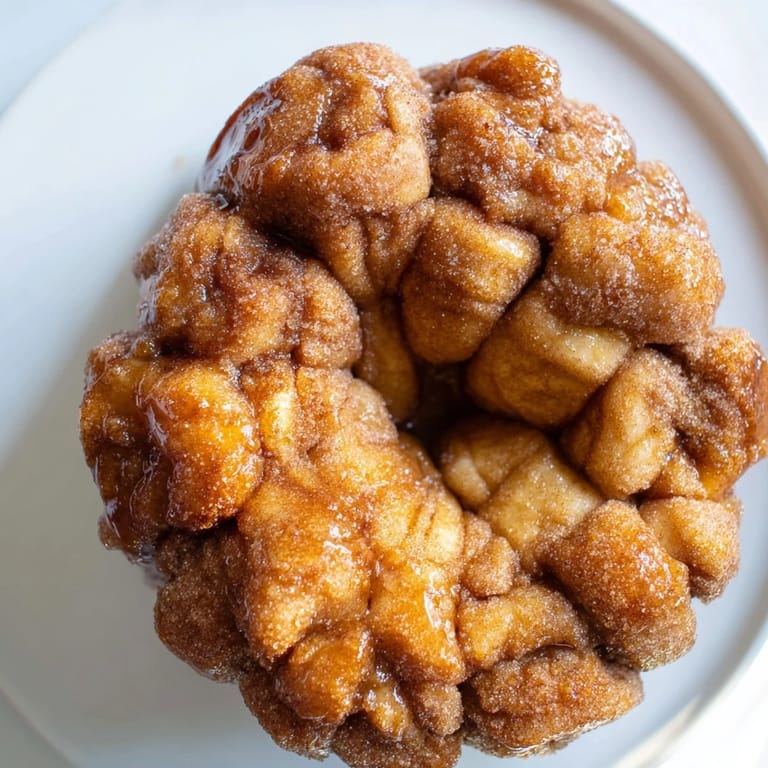
Save The first time everything clicked was when I stopped trying to make it look perfect and just let people eat it the way it was meant to be eaten. My sister grabbed a piece while it was still too hot and burned her fingers a little, laughed about it, and reached for another piece anyway—that's when I knew I'd nailed it.
The Art of the Butter Dip
The butter-dipping step is more important than it seems. If you just brush the balls, some stays dry and plain, but a quick dip creates this thin, crucial layer that helps the cinnamon sugar stick and then caramelize slightly during baking. I learned this after my first batch came out with bare patches that looked sad. The key is working quickly once the dough balls are made—butter starts to cool and thicken, so if you leave the dough sitting while you gather things, you'll notice the coating doesn't adhere the same way. Reheat the butter gently if it solidifies while you're working.
Why Warm is Always Better
Monkey bread changes completely as it cools. Warm, the cinnamon sugar is still slightly sticky, the butter is soft, and the bread itself is tender and yielding. By the next day, even stored perfectly, it becomes denser and drier. This isn't a make-ahead recipe in the traditional sense—it's best served within a few hours of baking, ideally while still warm from the oven. If you need to make it ahead, bake it the morning of serving and reheat it gently in a low oven for a few minutes to restore that freshly-baked texture.
Variations and Personal Touches
Once you understand the basic formula, you can play around. I've added chopped pecans or walnuts between the layers for extra texture and richness, pressed them into the dough balls before coating so they stay tucked inside. Some people add a touch of nutmeg or cardamom to the cinnamon sugar for complexity, and honestly, it works beautifully. The glaze can be plain or flavored with almond extract, bourbon, or even a pinch of sea salt on top. Breakfast or dessert, casual or fancy—this bread adapts to whatever you want it to be.
- Pecans or walnuts tucked between layers add crunch and nutty richness that complements the cinnamon perfectly.
- A tiny pinch of nutmeg in the cinnamon sugar brings warmth and depth without overpowering the cinnamon.
- If you're serving it for a special occasion, a pinch of fleur de sel sprinkled on the warm glaze adds an unexpected touch.
 Save
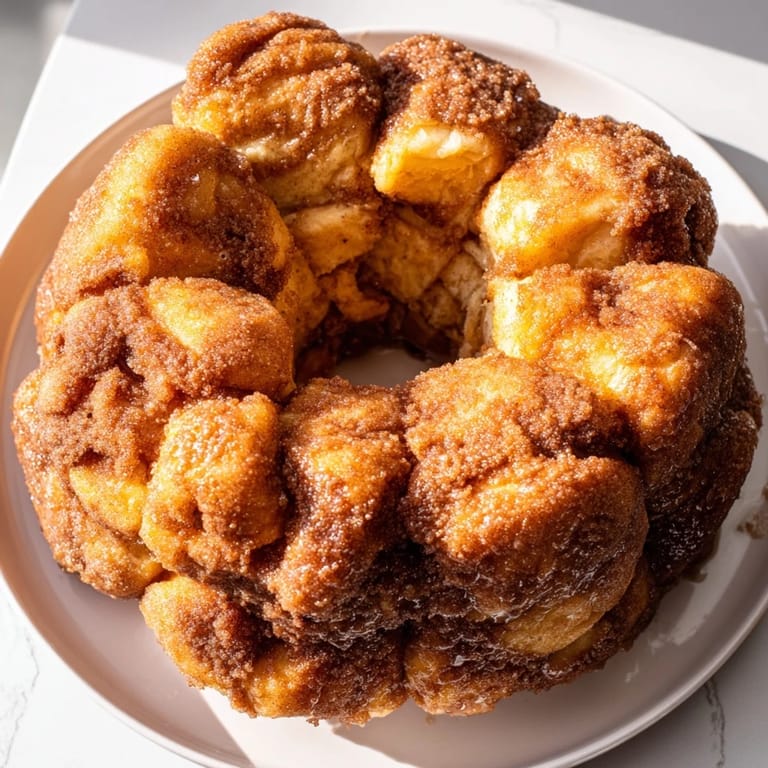
Save Monkey bread is one of those recipes that becomes a quiet tradition without you really planning for it. Make it once and people will ask for it again, pull it apart at the table, and feel like they're part of something simple and genuinely good.
Recipe FAQs
- → What makes the bread pull-apart?
Individual dough balls are coated in butter and cinnamon sugar, then layered together, creating a naturally separable texture once baked.
- → Can I add nuts to enhance flavor?
Yes, adding chopped pecans or walnuts between dough layers adds crunch and a rich nutty taste.
- → How long should I let the dough rise?
Allow the dough to rise for about 1 hour until doubled, then after shaping, let it rise again 20–30 minutes before baking.
- → What’s the best way to serve this bread?
Serve it warm for the softest texture and enhanced flavor, pairing nicely with coffee or chai.
- → Is a bundt pan necessary for baking?
A bundt pan helps shape the bread into its distinctive ring and allows even baking, but a similar deep pan can be used.